A secure hair system should stay flat through a commute, remain comfortable during a long shift, and come off without turning maintenance into a battle. That result depends less on finding one “strongest” product and more on matching the bond to the base, scalp, weather, and wear time.
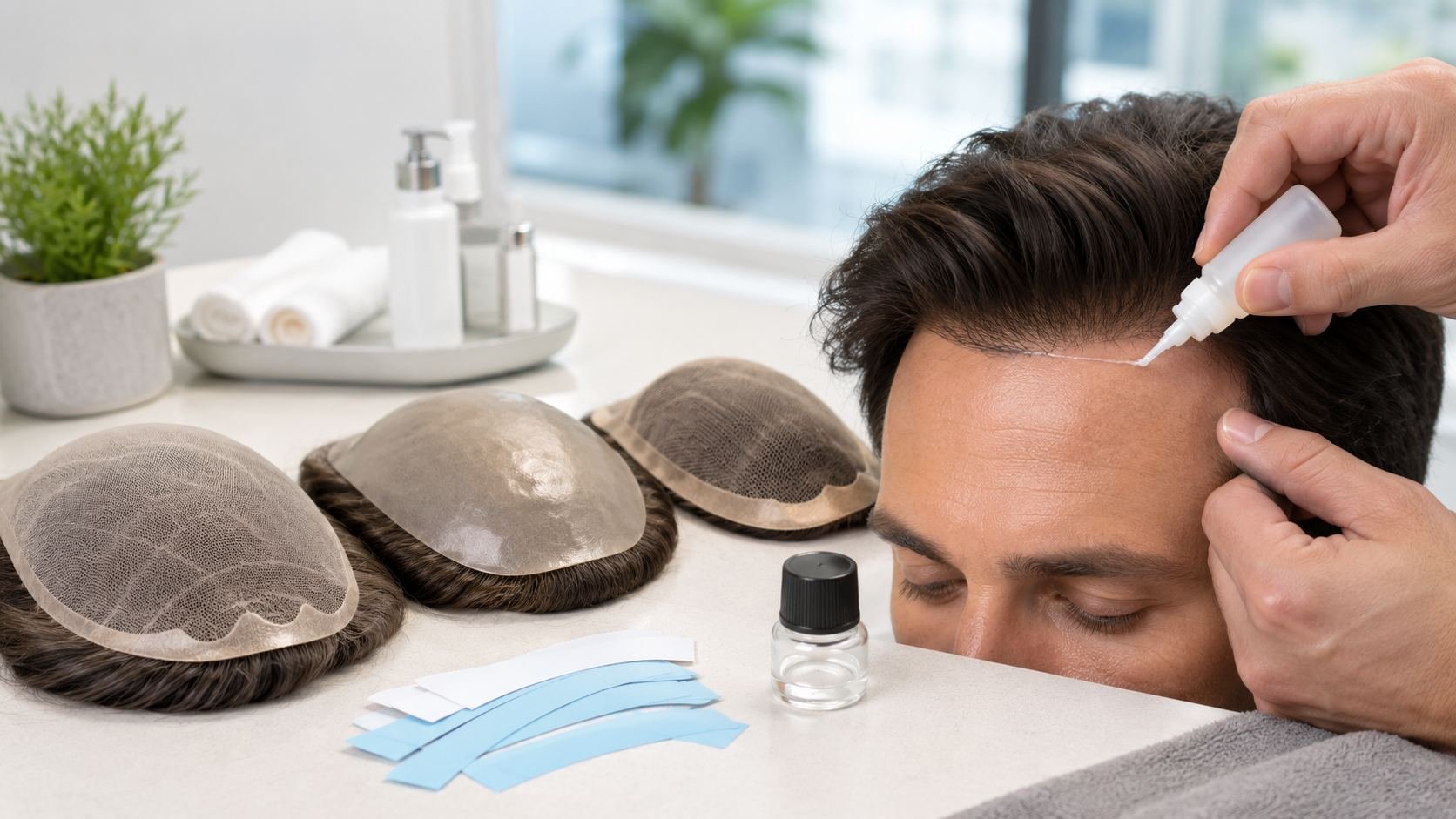
Hair system adhesive includes liquid glue, double-sided tape, and combinations of both. Each can give a reliable hold when the scalp is prepared well and the product suits the base.
Ask five questions before buying:
· Is the base lace, skin or PU, mono, or hybrid?
· Is the scalp normal, oily, dry, or sensitive?
· Will the wearer exercise, swim, or work outdoors?
· Is the climate hot, humid, cold, or dry?
· Is the system removed daily, weekly, or after extended wear?
More hold is not always better. A long-lasting hair system adhesive can create extra cleanup. A lighter daily wear hair system adhesive may be more practical for someone who removes the unit every evening.
Both tape and liquid hair system adhesive can look natural. The better option depends on where the bond sits and how often the unit is serviced.
Method | Best suited to | Main advantage | Point to watch |
Hair system tape | Beginners, PU edges, shorter wear | Fast placement and cleaner removal | Edges must stay hidden |
Hair system glue | Full bonding and fine front hairlines | Thin contact with the scalp | Needs careful curing |
Hybrid bonding | Lace with reinforced edges | Balances appearance and easy service | Must follow the base design |
Water-based hair system adhesive is often chosen for manageable application and easier cleanup. Acrylic hair system adhesive may suit wearers who need a firmer bond, but removal can take longer. Drying and curing times vary, so product directions should guide installation.
A hybrid method works when a unit contains more than one material. Tape may secure a PU perimeter while glue is used near a lace front.
The base is the first technical check. Adhesive should support the construction rather than work against it.
Lace is valued for airflow and a light feel. Its open mesh also means thick glue can push into the material and make cleaning harder.
An adhesive for lace hair system wear should form a thin layer. Low-shine tape is practical around the perimeter. At a visible front edge, lace front adhesive should dry clear and stay flexible. The scalp must be clean and fully dry before placement.
French lace balances breathability and strength. Finer lace can create a delicate front but needs gentler removal. Never pull the base away while the bond is firm.
A skin base has a smooth surface that works with tape or glue, making skin hair system adhesive choices flexible. Thin PU can create a close scalp-like appearance, while stronger PU areas may make cleaning easier.
PU hair system adhesive should be applied sparingly. A thick coat may show through a thin base or turn gummy in warm weather. Tape is often easier for new wearers because placement is visible before pressing down the unit.
Men’s systems may use full skin construction or combine lace with PU sides and back. Women’s toppers may also include skin sections for secure attachment.
Mono bases add structure and durability. The best mono hair system adhesive depends on the perimeter. When the design has a reinforced or PU edge, tape is simple to place and remove.
Hybrid hair system attachment should follow each material zone. A lace center can stay breathable while the reinforced perimeter carries most of the bond.
Two people wearing the same base can get different hair system adhesive hold time. Scalp oil, sensitivity, sweat, and preparation affect performance.
Hair system adhesive for sensitive skin should be patch-tested before a full installation. Redness, burning, swelling, or persistent itching means the product should be removed.
A hypoallergenic hair system adhesive may reduce irritation risk, but no formula can promise zero reaction. Shorter wear, gentle removal, and complete residue cleaning are sensible starting points. Never apply adhesive to broken skin.
The best hair system glue for oily scalp use still needs careful preparation. Oil left at the hairline can weaken a bond within days.
Clean the scalp, rinse away residue, and let it dry fully. A scalp protector for hair system installation may create a cleaner bonding surface. Keep face cream, conditioner, and hair oil away from the attachment area.
Weather changes real-world performance. Hair system adhesive for hot and humid weather must handle moisture, body heat, and faster oil buildup. A bond that works in a cool office may need earlier service outdoors.
A sweat-proof hair system glue may suit gym sessions or physical work, but curing time cannot be skipped. Heavy exercise immediately after installation can weaken an edge.
Waterproof hair system adhesive does not make an installation maintenance-free. Pools, salt water, hot showers, and saunas place different stress on the bond. Before swimming, check the perimeter and allow the stated cure time. Afterward, rinse the hair and dry the base area.
Wear time should fit hygiene and routine, not become a contest for the longest hold.
Daily wear hair system adhesive or removable tape suits people who take the unit off at night. Cleanup is quicker, and the scalp gets regular breaks.
Extended wear hair system adhesive is made for longer intervals between services. The scalp needs careful cleaning before attachment, and the front and sides should be checked every few days.
How long does hair system glue last? Many installations are serviced within one to four weeks, but that range is not a promise. Base material, scalp oil, sweat, climate, and washing habits can shorten it. If an edge lifts, odor appears, or irritation begins, remove and clean the unit.
Small steps often decide whether a bond stays neat:
1. Clean oil, old adhesive, and skin-care residue.
2. Let the scalp and base dry completely.
3. Apply thin, even layers.
4. Wait for the correct tack stage.
5. Respect curing time before exercise or swimming.
6. Use hair system adhesive remover and allow it to loosen the bond.
7. Clear old residue before hair system rebonding.
Do not force lace or thin skin away from the scalp. Pulling can stretch the material, loosen knots, and irritate skin.
Qingdao Eminent Hair Products Co., LTD is a wig supplier serving individual wearers, salons, wholesalers, and retailers. Its range includes men’s toupees, women’s wigs, toppers, full wigs, stock pieces, custom hair systems, and repair work. Base choices include lace, mono, skin, silk top, integration, and mixed constructions, with Remy and virgin human hair options.
Custom orders can cover base size, length, color, curl, density, grey percentage, and hair direction. Factory production and specialist knotting teams support repeat orders and detailed base work. A useful buying question is not only “Which unit looks best?” but “Which base and attachment routine fit the wearer’s week?”
The best hair system adhesive in 2026 is the one that fits the full wearing plan. Match hair system tape or glue to the base first, then account for scalp condition, climate, activity, and service schedule. A clean scalp, thin application, proper curing, and gentle removal usually matter more than the strongest label on the shelf.
There is no single best adhesive for hair system use. Lace needs a thin bond, PU works with tape or glue, and hybrid bases may use both.
Hair system tape is often easier to position, replace, and clean. Glue can create a thin bond but takes more practice with application, tack time, and removal.
It can, but a patch test is important. Stop using it if the skin develops burning, swelling, blisters, or lasting redness.
Sweat, heat, and scalp oil can soften the bond or lift the edges sooner. Good scalp preparation, full curing, and frequent checks help in humid conditions.
The quality of the products is the foundation of our existence!Customers'satisfaction is our permanent commitment!

Follow us on social media and find more about our hair procedures and for our latest news, photos and success stories.
TELEPHONE :+86-18765287179
WHATSAPP :+86-18765287179


© 2026 Qingdao Eminent Hair Products Co.,LTD. All Rights Reserved. Powered by HiCheng