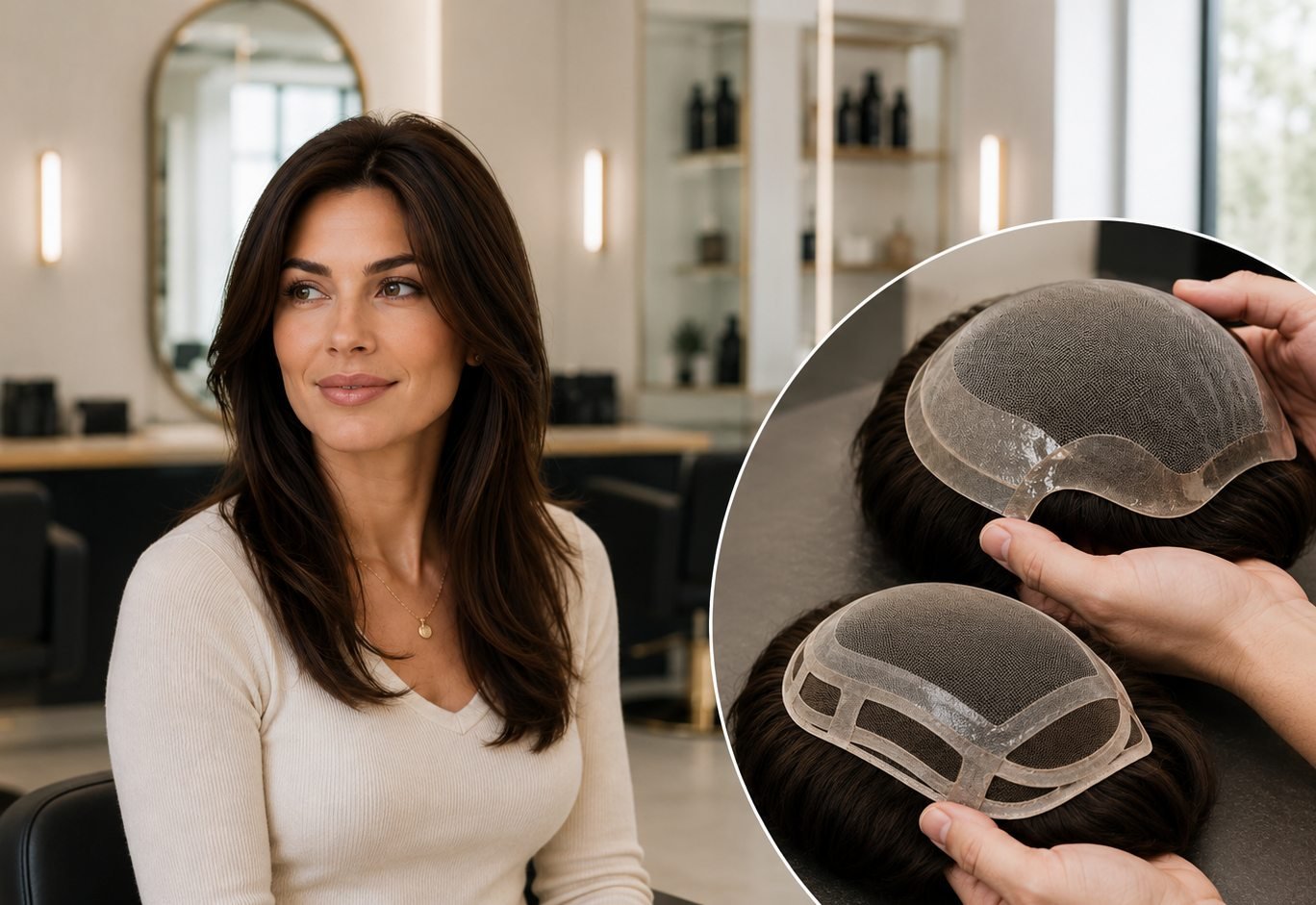
Choosing a hair replacement system means weighing competing priorities. Full lace feels light and breathable but needs careful handling. A skin base offers firm bonding, yet it can feel warmer. Monofilament provides structure and durability, though it may be less delicate at the front.
Hybrid hair systems place lace, polyurethane skin, monofilament, or silk-top sections where each performs best. The result can be a natural-looking hairline, better airflow, reliable attachment, and practical maintenance in one non-surgical hair replacement.
A hybrid hair system combines two or more base materials in one unit. Common constructions include a lace front with a polyurethane perimeter, a lace center with skin sides and back, or a monofilament top supported by lace.
Each section has a specific job.
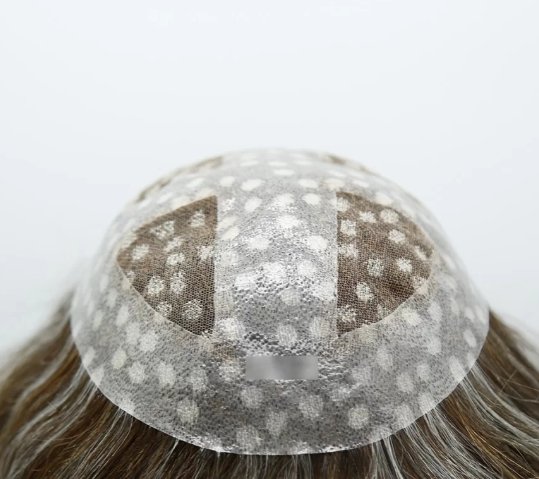
Lace is often placed across the front or top because its fine mesh can blend with the scalp and allow air to move through. Polyurethane, also called PU or skin, is commonly used around the perimeter because tape and liquid adhesive can be applied and removed more easily. Monofilament may be added where extra support or durability is needed.
This mapped construction separates a hybrid hair replacement system from full lace or full skin. It lets the wearer choose around daily needs rather than accept one material’s limits.
Performance becomes clear during normal routines: commuting on a humid morning, sitting under office lighting, training at a gym, or cleaning adhesive before an appointment. A well-designed hybrid base handles several of these situations at once.
The front edge is noticed first. Fine lace can sit flat against the skin, while carefully knotted human hair creates the appearance of scalp growth. This suits brushed-back cuts, side parts, and styles that expose the forehead.
Density still matters. A heavy front can look unnatural even on a fine base. A good custom hybrid hair system matches density, color, curl, grey percentage, and hairline shape to the wearer’s remaining hair.
A full skin base may hold more heat during long wear. Lace panels give warm air and moisture a path out. For someone who works outdoors, lives in a humid area, or wears a system for ten or more hours a day, that airflow can matter. A stronger perimeter also helps the unit keep its shape and bond securely.
Adhesive cleanup is a routine concern. Glue can settle into open lace, and rough cleaning may stretch the mesh. A PU perimeter provides a smooth surface, so residue is easier to see and remove.
Tape may be placed around the sides and back, with liquid adhesive at the visible front when a flatter finish is needed. The method should follow the base design, scalp condition, climate, and planned wear time.
Friction, shampooing, heat, adhesive removal, sunlight, and styling all affect a hair system’s working life. Hybrid bases can reduce stress on delicate areas by adding support where handling is frequent.
A lace front still needs gentle care, and thin skin can tear if pulled. Even so, a balanced construction is often more forgiving than an ultra-fine full-lace unit, reducing the trade-off between an invisible hair replacement system and a durable one.
The best base depends on the wearer’s priorities. This comparison shows the usual strengths of each construction.
Base type | Natural front | Airflow | Cleanup | Support |
Hybrid | High | High in lace areas | Easy on PU sections | Medium to high |
Full lace | High | Very high | Needs careful cleaning | Light |
Full skin | High with a thin edge | Low to medium | Simple | Medium |
Monofilament | Medium to high | Medium | Varies | High |
A hybrid hair system is not automatically better for everyone. Someone who removes a unit nightly may prefer another attachment design, while a wearer seeking maximum ventilation may choose full lace. Hybrid construction is most useful when several needs matter equally.
Hybrid bases suit men and women who want natural hair replacement without surgery, especially when a single-material system has caused practical problems.
Typical users include:
· Men with recession or top thinning who want an exposed hairline.
· Women with diffuse thinning who need a topper or integration system.
· Active wearers who need airflow and stable bonding.
· Salon clients who want simpler maintenance.
· Experienced wearers with clear density, color, base, and attachment preferences.
Hair loss patterns differ. Coverage area, existing hair, preferred style, and attachment method should guide the design.
A men’s hair replacement system often covers the front and crown while blending into short hair at the sides and back. Useful constructions include a lace front with PU at the back, a lace center with a skin perimeter, or a mono top with lace at the front.
Human hair can be cut into short textured styles, side parts, brushed-back looks, or longer layers. Matching the percentage and placement of grey usually looks more natural than one flat color.
Women’s hair replacement systems may be toppers, frontals, integration pieces, or full wigs. Lace or silk-top sections can create realistic parting, while reinforced edges add support. Integration designs let natural hair pass through selected openings, suiting diffuse thinning when enough healthy hair remains.
A convincing match considers texture, density, length, parting direction, and coverage, not color alone.
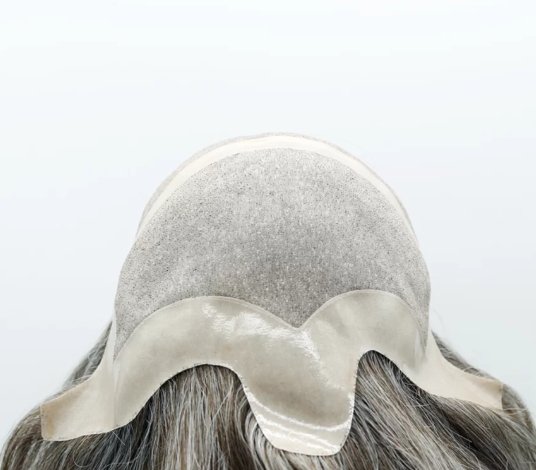
Start with the coverage area. The visible front calls for a fine edge, while the attachment zone needs enough strength for tape, adhesive, clips, or integration. The center should suit the wearer’s heat level and activity.
Before ordering, record:
· Base size and a clear template
· Hair color, grey percentage, density, length, and curl
· Front contour and parting direction
· Daily wear time, climate, exercise, and maintenance schedule
· Scalp sensitivity or past adhesive reactions
Stock systems suit common sizes and colors. Custom hair replacement is better when the base shape, hairline, density, or color blend must match closely.
Qingdao Eminent Hair Products Co., LTD is a professional wig and hair system supplier based in Qingdao, China. Its range covers men’s toupees, women’s wigs, toppers, integration systems, full-cap pieces, stock units, custom orders, and repairs. The factory works with lace, skin, monofilament, silk-top, and mixed base designs, along with Remy and virgin human hair.
Around 50 factory workers and approximately 500 knotting workers support varied hand-knotting methods. Custom specifications can include construction, size, hair type, length, color, grey percentage, curl, and density. This breadth serves salons, wholesalers, replacement studios, and individual wearers seeking a consistent supply partner.
No single base material is best at everything. By combining breathable lace, smooth PU, supportive monofilament, or realistic top sections, a hybrid design can offer a natural hairline, comfortable wear, secure attachment, and manageable cleanup.
The right choice depends on hair loss area, lifestyle, climate, styling habits, and maintenance. When these details are matched carefully, a hybrid hair system becomes a balanced form of non-surgical hair replacement for men and women.
Yes. A natural-looking hybrid hair system often uses fine lace at the front or top. Correct density, color, knotting, and hairline shape are just as important as the base.
Yes, when the attachment suits the activity and the scalp is prepared correctly. Lace improves airflow, while a PU perimeter offers a stable bonding surface. Adhesive performance varies with sweat, skin chemistry, and climate.
Yes. A custom hybrid hair system can match a chosen base size, front contour, material layout, color, density, length, curl, grey percentage, and parting direction. A template, color sample, and clear photos reduce matching errors.
The quality of the products is the foundation of our existence!Customers'satisfaction is our permanent commitment!

Follow us on social media and find more about our hair procedures and for our latest news, photos and success stories.
TELEPHONE :+86-18765287179
WHATSAPP :+86-18765287179


© 2026 Qingdao Eminent Hair Products Co.,LTD. All Rights Reserved. Powered by HiCheng