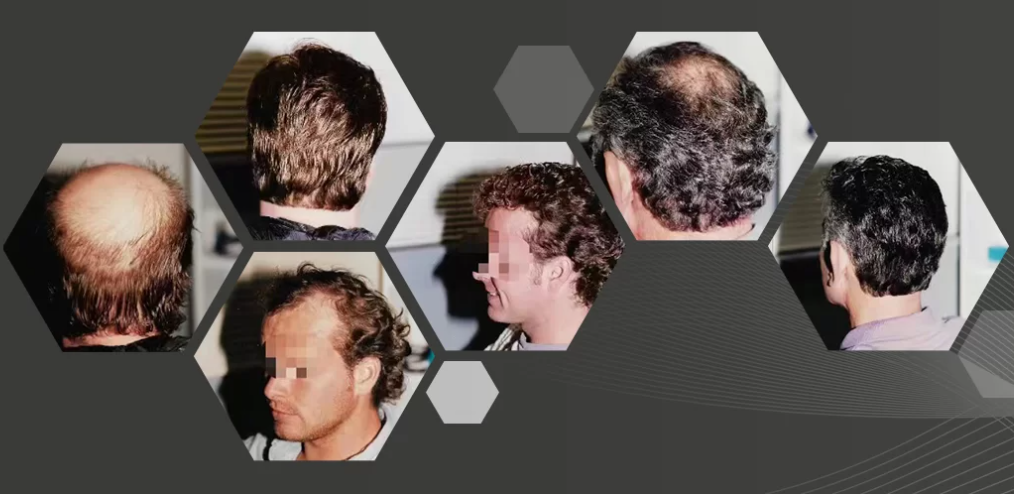
Hairlines shift for many reasons—aging, genetics, hormones, stress, illness, and styling habits. The hard part is telling a normal mature hairline from early pattern loss. The mirror lies; photos over time usually don’t.
Pattern hair loss is also common. Medical reviews estimate male androgenetic alopecia affects roughly 30–50% of men by age 50. The good news: modern wigs, toppers, and hair systems can match almost any stage, from mild temple recession to advanced thinning.
The difference is not just “where the line sits,” but whether it keeps moving.
Checkpoint | Mature hairline | Receding hairline | Balding pattern (advanced) |
What changes | Slight shift back, then stabilizes | Corners/front keep thinning and moving back | Wider front and/or crown thinning; scalp shows easily |
Shape | Soft “M” or “U,” still fairly even | Deeper “M,” one temple often worse | “M” plus crown loss, or large thin zones |
Time pattern | Slow, then stops | Continues over months/years | Ongoing and expanding |
Many clinicians describe progression using the Norwood scale, which maps male pattern hair loss into seven stages.
This section links the hairline discussion to something practical: picking the right coverage.
Use the same light and camera distance each time. This is the simplest way to answer the common question, “is my hairline maturing or receding?” Take front, both temples, and crown shots. Repeat every 3 months. The single best clue is progression—stable vs. changing.
Density behind the hairline stays strong. The front edge looks “set back,” not “broken.” Wet hair still covers the front evenly, and the corners don’t keep deepening year after year.
Recession is often uneven. One temple creeps back first. The hairline can look ragged, with finer hairs at the edge that don’t grow long. Side-swept styles start splitting at the corners; short cuts reveal a sharper “M” than before.
It becomes an area problem. The crown shows through under overhead lights. The front thins and the part looks wider. Video calls with strong top lighting make the scalp more visible than it used to be.
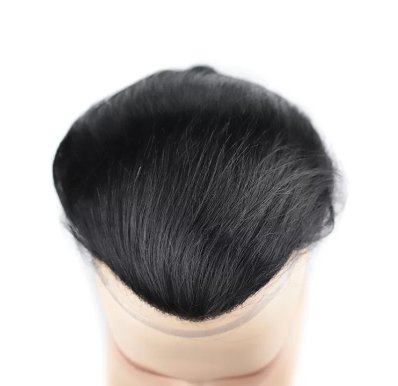
Most “mature hairline vs receding hairline” questions live in the early range. For example, Norwood class 2 is described as early temple recession and is not always considered balding.
As stages progress, needs change. Early stage (often 1–2) is about hairline detail. Mid stage (often 3–4) adds blending across the top as the crown starts to open. Advanced stage (often 5–7) usually means wide thinning or bald zones, so full coverage becomes simpler.
Women often see a different pattern: widening part, reduced ponytail thickness, and diffuse thinning over the top rather than a strong “M.” The same principle still applies—choose coverage based on where scalp shows in real lighting.
Different stages need different “coverage geometry.” A small piece can look more natural than a large one if the surrounding hair is still dense.
Attachment is part of the stage decision. Early-stage wearers often prefer clips because they can remove the piece at night and keep their own hairline visible on low-effort days. Adhesives and tapes are more common when the front edge must stay put through wind, sweat, or frequent styling. For crown thinning, a topper that sits exactly over the swirl can hide the “spotlight” effect from overhead lights without changing the whole hairstyle. If someone is specifically searching for a receding hairline wig, it usually means the front edge will be visible—so a lace front wig or a well-finished skin edge is worth prioritizing.
Stage and pattern | Best choice | Base and hairline notes |
Mature hairline or mild temples | Frontal or temple-focused partial piece | A soft, graduated hairline matters more than high density |
Early receding hairline | Front partial or small top system that blends | Lace fronts are popular when the hairline is exposed; skin bases can look very scalp-like but feel warmer |
Crown thinning with decent front | Hair topper for thinning crown | Mono/silk-style tops can give a realistic part line |
Diffuse thinning across the top | Larger topper or top system | Breathability becomes important; lace tends to feel cooler than solid skin bases |
Advanced balding (front + crown) | Full wig | Fit, cap comfort, and an age-appropriate hairline matter most |
On base comfort, the Eminent Hair FAQ describes both skin and lace as natural-looking, with lace being more breathable. That one line explains why athletes often prefer lighter, airier bases, while some office wearers prefer the flatter look of skin at the edge.
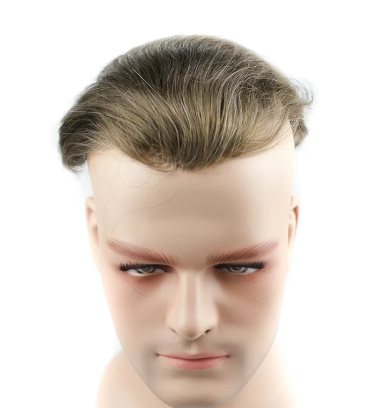
Small details decide whether a wig reads as “hair” or “hairpiece,” especially in bright indoor light.
A perfectly straight, low hairline can look unnatural on adults. Slightly higher with soft irregularity often reads more believable. For a mature-hairline look, a gentle “M” can be more age-appropriate than forcing a round shape.
Too much density makes edges obvious and traps heat. Medium density with a layered cut usually blends better and moves more naturally on camera.
Real hair is not one flat shade. Subtle root depth, controlled highlight/lowlight, or a planned gray blend often looks more convincing than chasing an exact single color match.
Pieces last longer when heat tools are limited and cleansing is gentle. Many daily wearers do one deeper wash per week and light touch-ups at the hairline in between. If tape or adhesive is used, regular cleanup keeps the edge thin and reduces residue that can show in close photos.
Qingdao Eminent Hair Products Co., LTD is a hair product manufacturer based in Qingdao, China, supplying stock and custom wigs and hair replacements for men and women, including options often used as a men’s hair system or a women’s topper. The company describes a team of 50+ factory workers and 500+ knotting workers supporting production and workmanship.
For timing and after-sales expectations, the FAQ states typical custom lead time is about 6–7 weeks (rush about 3–4 weeks), while stock pieces may ship within about 3 days after payment. It also notes a repair or remake commitment for manufacturer defects reported within 2 months after receiving custom products, and that templates/samples can be kept on file for repeat orders.
Mature hairlines, receding hairlines, and balding can look similar in a single snapshot, but they behave differently over time. That’s why the “right wig” is stage-based. Small frontal pieces work when density behind the line is still strong. Toppers solve crown and part-line show-through without changing the whole head. Full wigs often become the simplest, most consistent answer once thinning is widespread. Match the stage to the coverage type, base comfort, and hairline design, and the result tends to hold up where it matters: overhead lights, windy sidewalks, and close-up video.
Track photos every 3 months using the same lighting and angles. A mature hairline usually shifts slightly and then stays stable, while a receding hairline keeps changing and the corners thin unevenly over time.
A small frontal or temple-focused partial piece often looks more natural than jumping straight to a full wig. It restores corners while keeping the wearer’s existing density behind the hairline.
If the front hairline is still dense, a hair topper for thinning hair usually looks more natural because it keeps the original front edge and adds coverage where overhead light reveals scalp.
Both can look natural. Lace is often chosen for breathability, while skin bases can lie flat and mimic scalp closely. Eminent Hair highlights breathability as the main difference, with lace being more breathable.
Yes. The Norwood scale stages describe how far recession and crown thinning typically progress, which maps directly to whether a frontal piece, topper, or full wig will look most seamless.
The quality of the products is the foundation of our existence!Customers'satisfaction is our permanent commitment!

Follow us on social media and find more about our hair procedures and for our latest news, photos and success stories.
TELEPHONE :+86-18765287179
WHATSAPP :+86-18765287179


© 2026 Qingdao Eminent Hair Products Co.,LTD. All Rights Reserved. Powered by HiCheng