
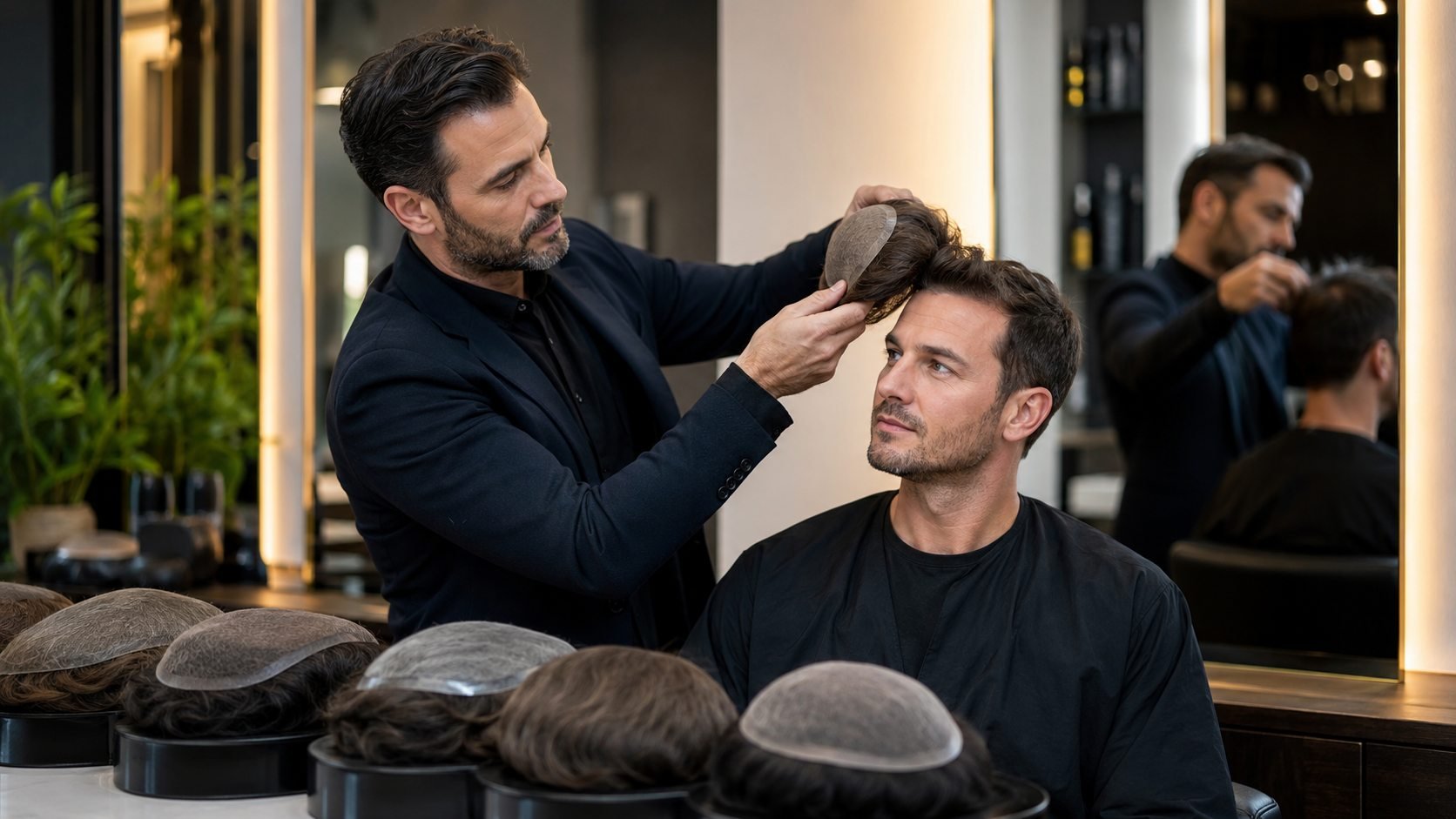
For a hair replacement salon, a missing stock piece can mean a missed appointment, a delayed installation, or a client walking out to look for a faster solution. Men who book a consultation for hair loss usually want a clear answer quickly: Can this be fitted soon? Will it look natural? Can it match my hair color and lifestyle?
That is why a smart men’s hair system inventory is not just about keeping more pieces on the shelf. It is about keeping the right stock toupees for the clients most likely to sit in the salon chair. A balanced inventory should cover different base materials, common sizes, natural hair colors, suitable density levels, and daily-wear needs.
Stock toupees help salons respond faster to real client situations. A man may need a replacement before a business trip. Another client may damage his old hair system during removal. A first-time wearer may not want to wait several weeks for a custom order before seeing how a men’s hair replacement system feels.
In these cases, ready to ship hair systems give the salon room to act. The stylist can select a close base size, cut it down, match the front hairline, trim the hair length, and complete a cut-in service much faster than starting from a fully custom order.
A strong stock hair systems for men plan also makes the business feel more professional. Instead of only showing pictures or samples, the salon can show real base materials and explain the difference by touch and fit.
Clients often feel nervous before their first toupee fitting. When they can see a lace toupee, a mono toupee, and a skin toupee side by side, the choice becomes easier. They can feel the breathability of lace, the stronger structure of mono, and the smooth scalp-like look of thin skin.
If a salon only offers custom orders, some urgent buyers may not wait. Keeping stock toupees for salons in common colors and sizes can help capture clients who need a fast, natural-looking solution.
A good salon hair replacement inventory begins with the client profile. Not every customer needs the same base. A gym trainer, a retired office worker, and a young man with a sharp hairstyle may all need different stock hair systems.
Before buying in bulk, salons should look at the most common hair loss patterns in their area, the local climate, popular hairstyles, and client budgets. A shop serving mostly first-time wearers may need more natural hairline toupees. A clinic serving daily wearers may need more durable hair replacement systems.
Most male clients need coverage around the top, crown, or front hairline. Smaller thinning areas may only need a compact base, while larger bald areas need extra cutting room. Standard sizes such as 5”×7”, 6”×8”, 7”×9”, and 8”×10” can cover many salon cases.
Active clients who sweat often may prefer breathable hair systems. Office workers may want a clean, low-maintenance look. Men who remove and reattach their system often may need a base that handles tape, glue, and cleaning without breaking down too quickly.
Some clients want the thinnest skin base for the most invisible look. Others want a stronger system that lasts longer with regular wear. Salons should keep both short-cycle and longer-cycle choices, instead of pushing one base type for every client.
Base material is the center of any men’s toupee wholesale buying plan. It affects comfort, hairline, durability, attachment, cleaning, and final styling. A salon does not need every possible base at the beginning. It needs a balanced mix that can solve the most common service requests.
The table below gives a practical starting point for stock toupee planning.
Base Type | Best For | Salon Inventory Value |
Fine mono toupee | Daily wear, durability, stable structure | Good core inventory for repeat clients |
Full lace toupee | Breathability, light feel, natural hairline | Strong choice for warm climates and comfort-focused clients |
Thin skin toupee | Scalp-like look, clean attachment | Useful for clients asking for an undetectable men’s hair system |
V-loop hair system | Natural hair direction, no visible knots | Good for front hairline and short hairstyle requests |
PU skin edge hair system | Easy tape or glue cleanup | Practical for maintenance appointments |
A fine mono stock toupee is a reliable piece for salons that serve daily wearers. Mono base material has a firmer structure than lace, so it works well for clients who want a practical balance between natural appearance and longer service life.
Fine mono is also useful for new stylists because it is more forgiving during fitting and maintenance. For clients who come back every few weeks for cleaning and reattachment, mono can be a steady choice.
A full lace men’s toupee is often chosen by clients who care about airflow and a soft wearing feel. Lace is especially useful in warm weather, under bright salon lighting, or for men who dislike a heavy base.
Lace can also create a natural front hairline when fitted correctly. For salons, keeping lace toupees in common colors gives more flexibility for clients who want comfort without losing a realistic look.
Thin skin toupees and V-loop hair systems are important for clients who look closely at the scalp effect. The smooth base can sit flat against the skin, and V-loop ventilation can help create a cleaner hair appearance without visible knots.
These systems are often requested by younger clients, men with exposed hairlines, or clients who like short, neat styling. Salons should keep at least a few thin skin or PU skin hair system options for high-naturalness consultations.
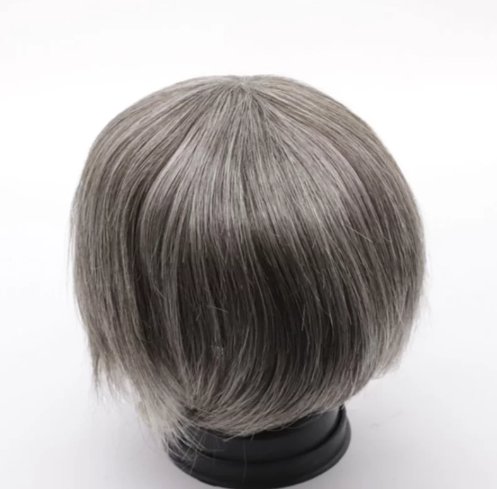
Size planning can save money. Buying too many rare sizes ties up inventory. Buying only one large size can create waste after cutting. A smarter plan is to keep a few common sizes that match typical male hair loss areas.
For most salons, the core range should include small, medium, and large base coverage. This makes the fitting process more flexible without creating a crowded stockroom.
These sizes work well for crown thinning, partial top coverage, or clients with early-stage hair loss. They are also useful when a client wants a lighter feel and does not need a full top replacement.
A 7”×9” stock toupee can suit many common men’s hair replacement cases. It gives enough room for cutting and shaping while still staying manageable for salon work.
Larger bases are useful when the client has a wider bald area or when the stylist needs extra material for shaping. They are also helpful for uncertain cases where the salon wants more cutting room during the fitting.
Hair color and density decide whether a stock hair system looks natural after installation. The base may be excellent, but if the color is too dark or the density is too heavy, the result can look obvious.
Salons should avoid overstocking unusual shades at first. Start with natural colors that match the largest group of clients, then add grey hair options and custom support for special cases.
Common men’s toupee color choices often include natural black, off-black, dark brown, and medium brown. These shades can serve many clients and are easier to blend after cutting.
For mature clients, grey percentage options are useful. A small amount of grey hair can make the final result look more believable than a solid dark color, especially for men over 45.
Many clients ask for “more hair,” but too much density can make a toupee look fake. For men’s hair replacement systems, medium-light and medium density choices are often more natural for daily wear.
Older clients, business professionals, and first-time wearers usually benefit from softer density. Younger clients or clients with thicker side hair may need a fuller stock toupee to match their own hair.
The right number depends on appointment volume, client type, and budget. A small salon does not need a huge warehouse. It needs enough pieces to handle common requests without panic buying.
A practical starter inventory can look like this:
· 2-3 fine mono stock toupees for durable daily wear
· 2 full lace toupees for breathable comfort
· 2 thin skin or V-loop hair systems for natural hairline clients
· Core colors such as natural black, off-black, dark brown, and medium brown
· Main sizes such as 6”×8”, 7”×9”, and 8”×10”
· Mostly medium-light to medium density
A new salon can begin with 6-10 stock toupees. The goal is not to cover every client. The goal is to serve the most likely cases and use custom orders for special needs.
A salon with weekly hair replacement appointments should carry more base variety. Fine mono, full lace, PU skin, and thin skin should all be available for consultation. This helps stylists match the client’s lifestyle instead of forcing one product into every case.
Wholesale buyers and hair system distributors need larger quantity planning. Their focus should be repeatable demand: common sizes, common colors, balanced density, and base types that salons reorder often.
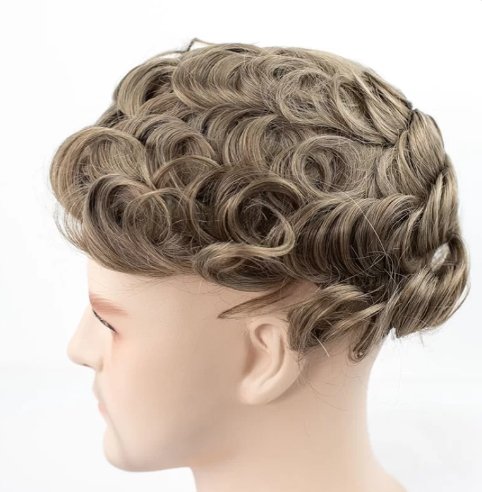
Stock and custom hair systems should work together. Stock toupees are best for fast service, standard hair loss areas, emergency replacement, and first-time client trials. Custom men’s toupees are better when the client needs a special base shape, unusual density, specific grey ratio, special curl, or exact hair direction.
A salon can use stock systems to serve urgent clients while building long-term custom orders for precise repeat fittings. This gives clients speed now and better personal matching later.
Stock hair systems for men are ideal when the client needs an appointment this week, not next month. They are also useful for consultations where the client wants to see and touch the product before paying.
Some clients have unusual head shapes, unique color needs, or very specific front contour requests. In those cases, custom hair replacement gives the salon more control over the final result.
Qingdao Eminent Hair Products Co., LTD works as a professional hair products manufacturer for men’s toupees, women’s wigs, toppers, hair extensions, stock pieces, and custom hair replacement systems. The company supplies multiple base designs, including lace, mono, skin, silk top, and integration structures, giving salons and wholesale buyers a wider selection for different client needs.
Its production setup includes factory workers and a large group of knotting workers with experience in different ventilation methods. This matters for salons because the quality of knotting, base handling, hair direction, and density control directly affects the final salon result. Hair material choices include Indian hair, Chinese hair, Mongolian hair, European hair, Remy hair, and virgin hair, with options for different colors, lengths, curls, and grey percentages.
For B2B buyers, the main value is practical: stock pieces for faster service, custom support for special orders, and direct communication for product demands such as size, color, length, quantity, and price. For salons that want to build a steady men’s hair system inventory, a supplier with stock and custom capacity can support both quick appointments and long-term client retention.
A strong stock toupee inventory should not be random. Salons should keep ready the base types, sizes, colors, and densities that solve real client problems. Fine mono stock toupees can support durability. Full lace toupees can serve comfort-focused clients. Thin skin, PU skin, and V-loop hair systems can help clients who want a natural scalp effect and clean hairline.
The best salon inventory is flexible, not oversized. Start with common sizes, natural colors, and medium-looking density. Add more pieces based on actual appointments, returns, and client feedback. With the right stock hair systems for men, a salon can shorten waiting time, improve consultations, and turn more hair loss inquiries into booked fitting services.
A small salon can start with 6-10 stock toupees across fine mono, full lace, and thin skin bases. A busier hair replacement salon may need more sizes and colors to support weekly fittings and urgent replacement requests.
There is no single best base for every first-time client. Fine mono is good for durability, full lace is good for breathability, and thin skin or V-loop hair systems are strong choices for clients who want a natural hairline and scalp-like look.
Sizes such as 6”×8”, 7”×9”, and 8”×10” are useful for many men’s hair replacement system appointments. Smaller sizes can handle partial coverage, while larger bases give more cutting room for wider hair loss areas.
Salons in hot climates or comfort-focused markets may keep more lace toupees. Salons serving clients who care most about an undetectable scalp effect may keep more thin skin and PU skin hair systems. A balanced inventory should include both.
Yes. Stock toupees can usually be trimmed, cut in, blended with the client’s side hair, and styled during the salon appointment. That is one reason stock toupees for salons are useful for fast service and first-time fittings.
The quality of the products is the foundation of our existence!Customers'satisfaction is our permanent commitment!

Follow us on social media and find more about our hair procedures and for our latest news, photos and success stories.
TELEPHONE :+86-18765287179
WHATSAPP :+86-18765287179


© 2026 Qingdao Eminent Hair Products Co.,LTD. All Rights Reserved. Powered by HiCheng