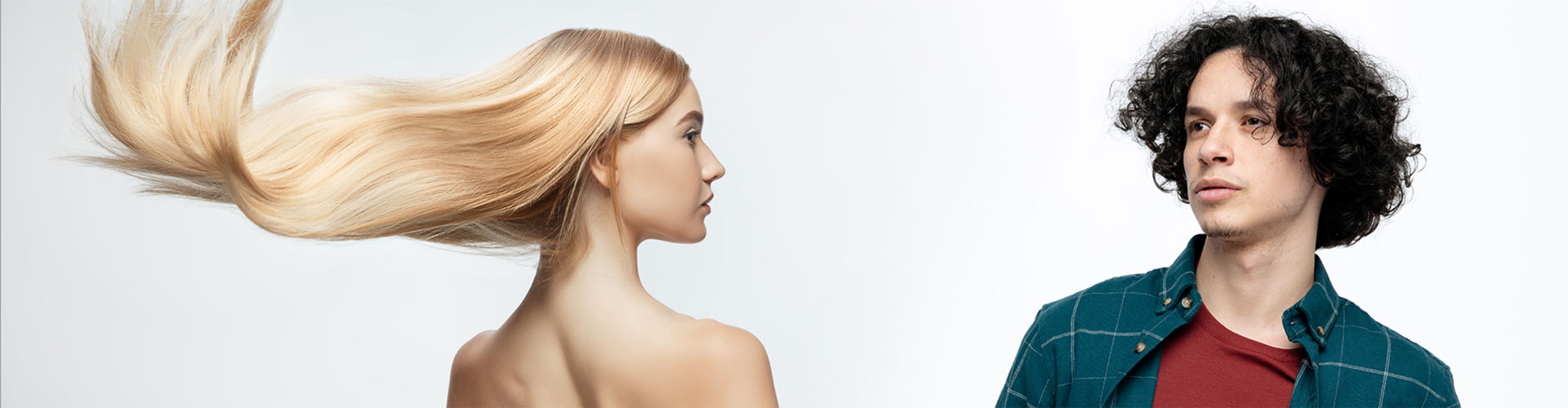
The client points to her parting. In the photograph she brought, she has also circled the front hairline. She asks for a hairpiece. Before choosing one, let her make the part she wears outside the salon. The front edge she circled in the photo may barely show now, while the crown bothers her every morning. Or the reverse. The mirror can settle that first question better than a catalogue title.
Eminent Hair has separate women's frontal and topper categories. We can look at both with the salon. The consultation here concerns coverage and appearance. Questions about a medical cause of hair change belong with an appropriate clinician.
Ask her to point to the area while the hair is arranged as usual. Draw around it. The line may run across the front and temples, or it may sit over the crown. With permission, photograph the view from above and straight on under the same light. Put her description beside the drawing. If she says “more volume,” write where she wants that volume; the person ordering the piece may picture another part of the head.
The frontal pages point you toward the hairline. Topper pages point toward the top or crown. Now take the model drawing out of the catalogue and place its base outline over her sketch. If it crosses the area she marked, check exactly where its edge will meet her own hair. One base might be wider than she wants; a smaller one might leave part of the crown visible. The drawings will expose that difference immediately.
Suppose her pencil line reaches nearly from forehead to crown. The little display sample may look lovely and still leave half that line uncovered. Spread out the other base drawings before discussing color. She should see the coverage boundary first, while changing it is still a pencil decision.
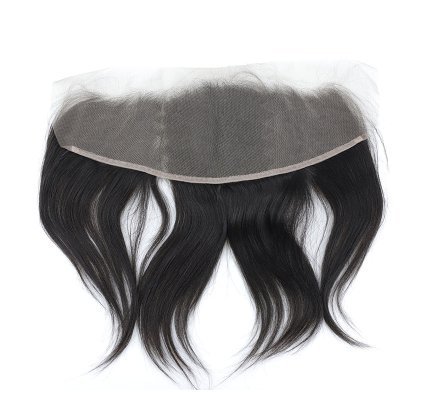
Stand across the room while she sweeps the front hair back. Can you see the edge of a frontal sample? Come closer and look at the temples. For a topper, change positions: above the parting, then beside her. A piece can disappear in one mirror and show plainly from the angle of someone standing next to the client. Let her see both views before approving the look.
The appointment hair is loose. At work she wears a low ponytail. Ask her to tie it while the sample is in place. Does the base edge appear near the temple? Move the part too if she changes it during the week. A newly visible line is easy to discuss with the sample still on the table. Save the tied-back photograph only with her permission.
Even the right brown can look wrong if a thick band of new hair meets a thin side section. Hold the sample at that join in consistent light. Then compare length and curl or straightness. Note each choice separately on the order sheet; a change of density should not silently become a change of shade. Lay the base drawings from our topper and frontal options over her sketch. The exact model sheet, rather than memory of another piece, supplies its dimensions and material.
Her usual morning tells you what a sample fitting cannot. Perhaps she has time to attach the piece herself and remove it before bed; perhaps she doesn't want that task at all. A beautiful piece left in a box is no solution for her. If a stylist will fit it for an occasion, write down who handles cleaning afterward. The calendar may decide between two equally good-looking samples.
The fitter should part the natural hair at the proposed attachment points. There may be less suitable hair there than the photograph suggested. With a sample in place, have the client turn her head and describe the tension. A clip or tape may work differently on another base, so the method must be chosen for this fitting. If she removes the piece nightly, let her practice the step. Refer scalp sensitivity or a possible medical concern to an appropriate professional; our product page cannot examine her scalp.
Put the maintenance appointment and home-care tasks in the consultation file. The instructions should describe the actual hair and base supplied. If the client cannot fit that routine into her week, the product choice deserves another look, however neatly it covers the area.
Before she leaves, lay the selected base outline over the coverage sketch and write the model reference beside it. Keep the permitted front, top, and side views. On the tied-back picture, draw a small arrow to the edge that became visible. Add the approved shade, texture, density, and length. At the next appointment, a stylist can see why this model was chosen without guessing from unlabeled photos.
If she circles both the front and crown, put more than one base drawing beside the sketch. She may need a different configuration from the small frontal or topper first shown. Approve a sample for fit and blend, then settle attachment and care. A salon reordering later will need to know which model and look she actually accepted.
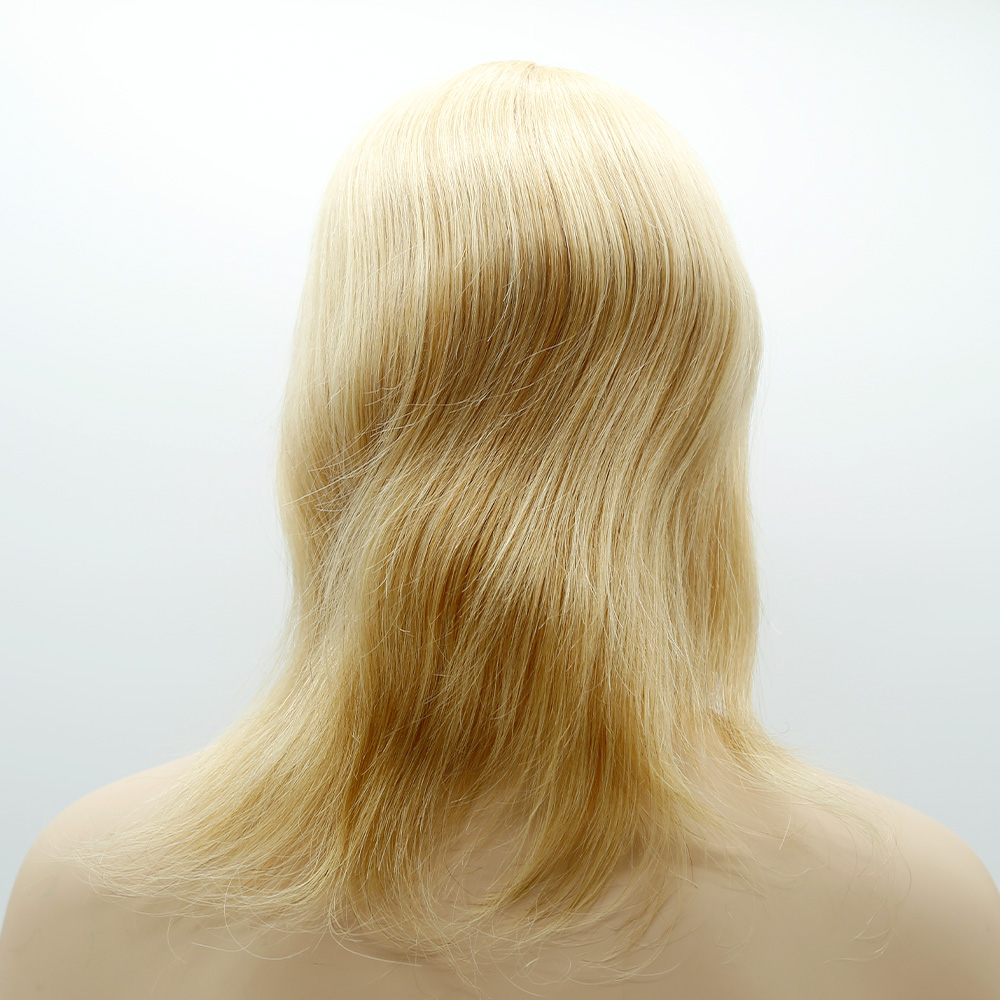
Send the measurements, sketch, approved photos, color and density references, and wearing routine. We can look through the relevant women's hairpiece options and ask about a model detail when needed. A note saying “front edge and parting” gives us a better opening than a category name chosen before the consultation.
Ask her to point to the spot in the mirror. Front edge? Begin with frontal models. Top or crown? Look at toppers. Overlay the actual base outline on her drawing before deciding how much coverage either offers.
If the front edge is the concern, show a frontal sample there. Have her sweep or part the hair as usual and inspect the transition from conversational distance. The front edge matters more than the word on the product card.
For a crown concern, start with a topper base drawing. Does it cover the whole marked area? If the outline stops halfway through, bring out another size or design before discussing hair color.
Compare the sample with her own hair at the side, in the same light. Step back. If the edge looks too full, changing only the shade may not help. Record density and color as two different decisions.
Have her show the area and the part or ponytail she uses. Ask who will fit, remove, and care for the piece during an ordinary week. The fitter can check comfort and any sensitivity. Take the measured sketch into the sample review.
The quality of the products is the foundation of our existence!Customers'satisfaction is our permanent commitment!

Follow us on social media and find more about our hair procedures and for our latest news, photos and success stories.
TELEPHONE :+86-18765287179
WHATSAPP :+86-18765287179


© 2026 Qingdao Eminent Hair Products Co.,LTD. All Rights Reserved. Powered by HiCheng