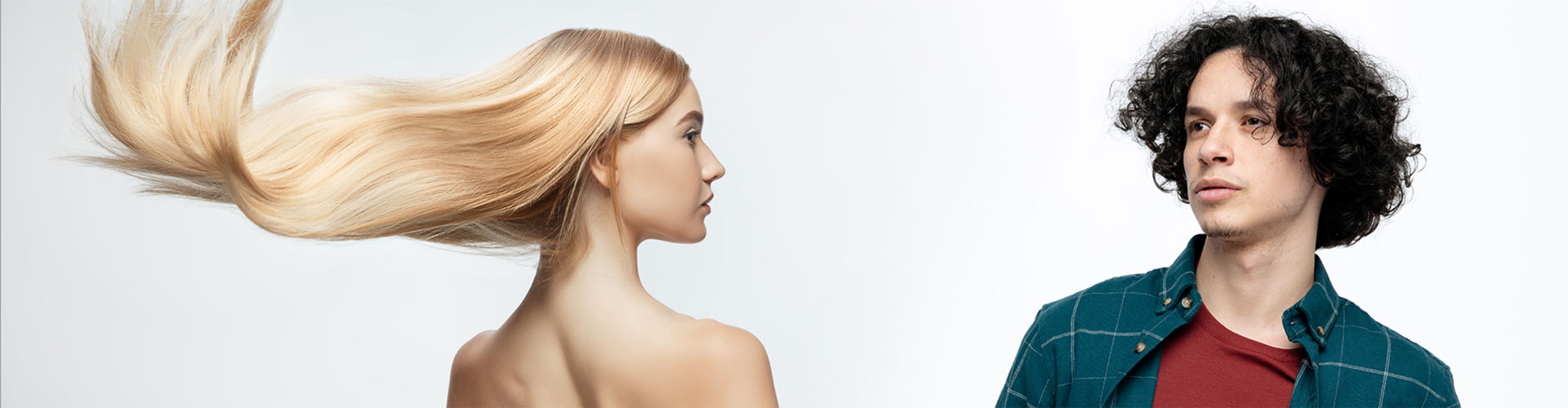
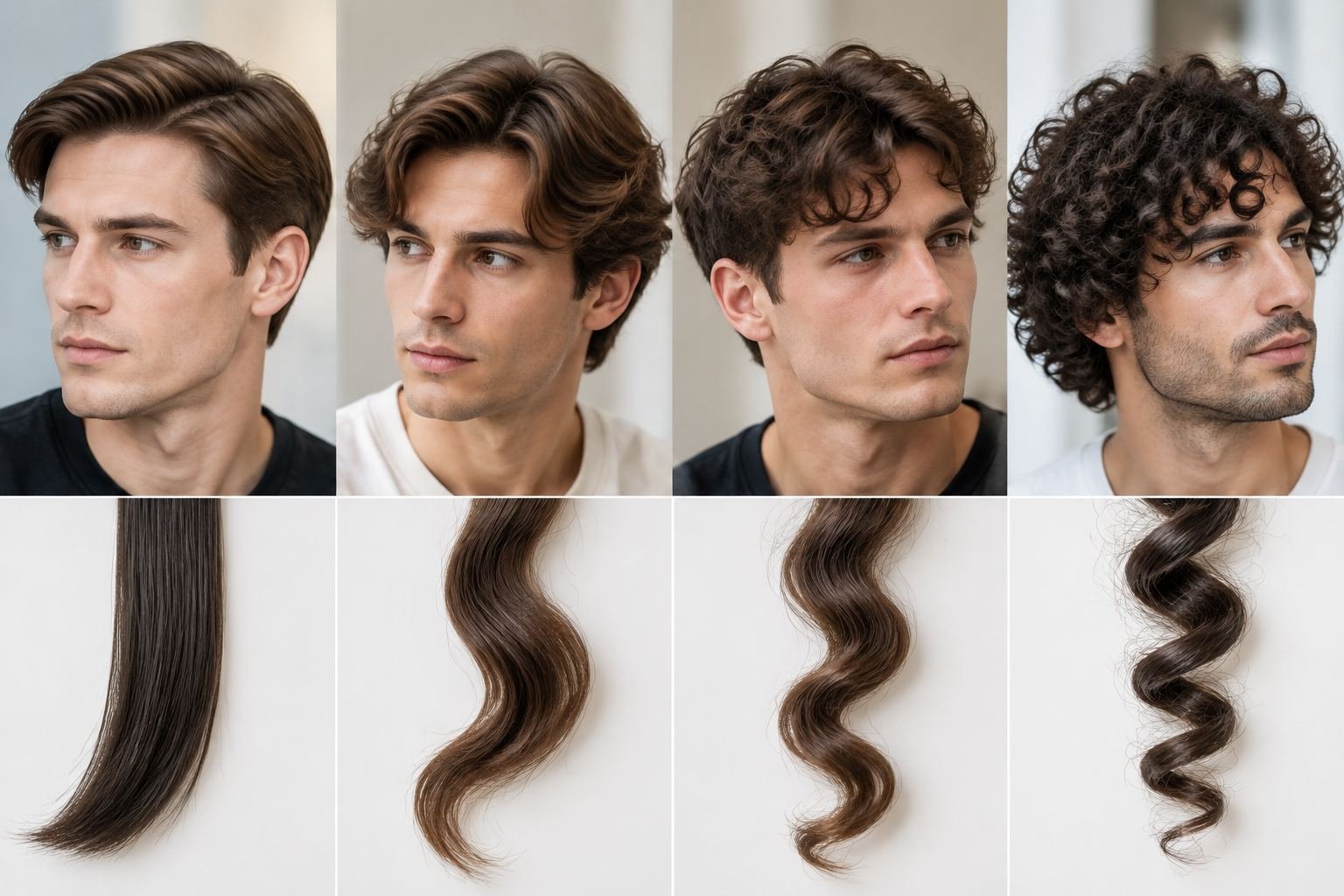
A hair system curl and wave specification controls the bend built into the hair before the piece is cut and styled. Larger millimeter measurements create looser movement; smaller measurements create tighter curls. The right pattern should match the wearer’s side and back hair, finished length, preferred hairstyle, and daily styling routine.
The number is only a production reference. Hair origin, strand diameter, processing, density, length, humidity, washing, and the final haircut all change how the pattern appears. Buyers should pair the curl measurement with clear photos and a description such as light wave, medium wave, loose curl, or tight curl.
Choose the loosest pattern that still matches the wearer’s natural side and back hair after cutting. Straight or very loose wave suits sleek short styles. A light-to-medium wave adds movement and blending. Tighter curls work when the remaining hair is clearly curly and the finished length is long enough to show the pattern.
Approximate pattern | Visual result | Common use | Main check |
Straight to 36 mm | Nearly straight with soft movement | Sleek cuts and mild texture | Can look flatter after washing |
32 mm | Loose natural wave | Common short and medium styles | Often appears subtle after a short cut |
25 mm | More visible medium wave | Wavy side hair and textured styles | Needs length to keep the bend |
19 mm and below | Defined curl to tight curl | Naturally curly or coily matches | Shrinkage and daily care increase |
The millimeter value describes the approximate size used to form the wave or curl during production. A larger diameter produces a wider curve. A smaller diameter produces a tighter coil. Supplier charts may not look identical because processing time, hair type, strand thickness, and finishing methods affect the final result.
Do not read 32 mm as an exact finished ringlet diameter on every strand. Treat it as a repeatable factory setting. The buyer’s reference should include the supplier’s approved sample, dry photographs from several angles, and the final hair length. Those controls make repeat orders more reliable.
A review of the men’s hair system collection shows straight, lightly waved, and curlier finished looks across different base constructions. Use the surrounding natural hair as the main matching reference.
The side and back hair frame the replacement area. If those sections lie straight against the head while the top forms distinct curls, the join can look obvious even when color and density are correct. Check the hair at the temples, above the ears, and around the occipital area after it is washed and allowed to dry naturally.
Photographs taken immediately after blow-drying may hide the natural pattern. Ask for dry daylight views without heavy gel or fibers. A short video of the wearer turning the head shows whether the side hair forms an S-wave, a soft bend, or a compact curl.
Words such as wavy and curly cover a wide range. A small sample from the side or back can show strand diameter, color blend, gray content, and natural bend. For a remote order, place several dry strands on white paper beside a ruler and photograph them without stretching the curl.
A curl needs enough length to complete its shape. Hair that shows a clear wave at six inches may look almost straight after being cut to two inches. Tight curls also contract, so the stretched strand length can be noticeably longer than the visible finished length. Specify whether the order length is measured straight or in its resting state.
For a short crop, a light or medium wave may supply texture without producing obvious rings. The barber can remove part of the bend during cutting, especially around the front and sides. Order photos should show the uncut pattern and the expected finished style so the factory does not overcurl the piece to compensate.
Medium lengths display S-waves more clearly and allow curls to group. Longer hair adds weight, which can stretch loose waves while leaving tighter curls visible. Layering can release some weight and make the pattern spring higher. The density and haircut therefore need to be planned with the curl, not after it.
· A flat side part usually needs straight hair or a loose wave that can lie close to the base.
· A textured crop can use a light or medium wave for separation without a full curl pattern.
· A brushed-back style needs root direction that supports backward movement as well as the chosen wave.
· A defined curly style needs enough length, suitable density, and room at the front and crown for curl grouping.
Curl and ventilation are separate specifications. A 25 mm wave will not automatically brush backward if the roots are ventilated forward. State the style direction, part location, crown position, and curl setting together. Otherwise the wearer may fight the roots every morning.
Curly hair occupies more visible space than straight hair at the same ventilation density. A system ordered at a familiar percentage can appear fuller once the strands bend and overlap. Fine hair produces softer groups, while coarse hair can make the same curl look larger and more defined.
Density should be checked around the front and crown after the curl is activated and dry. Wet hair compresses and can make a full system look sparse. Heavy styling cream can create the opposite problem by clumping strands into thick sections. Approve density and curl under a consistent dry condition.
Factor | What changes | Practical order note |
Finished length | Short cuts remove visible bends | Send both supplied and finished length |
Hair diameter | Coarse strands make curls look stronger | Match side-hair thickness |
Density | Curl adds apparent volume | Review the percentage after drying |
Root direction | Controls where curls fall | Mark part, front, and crown |
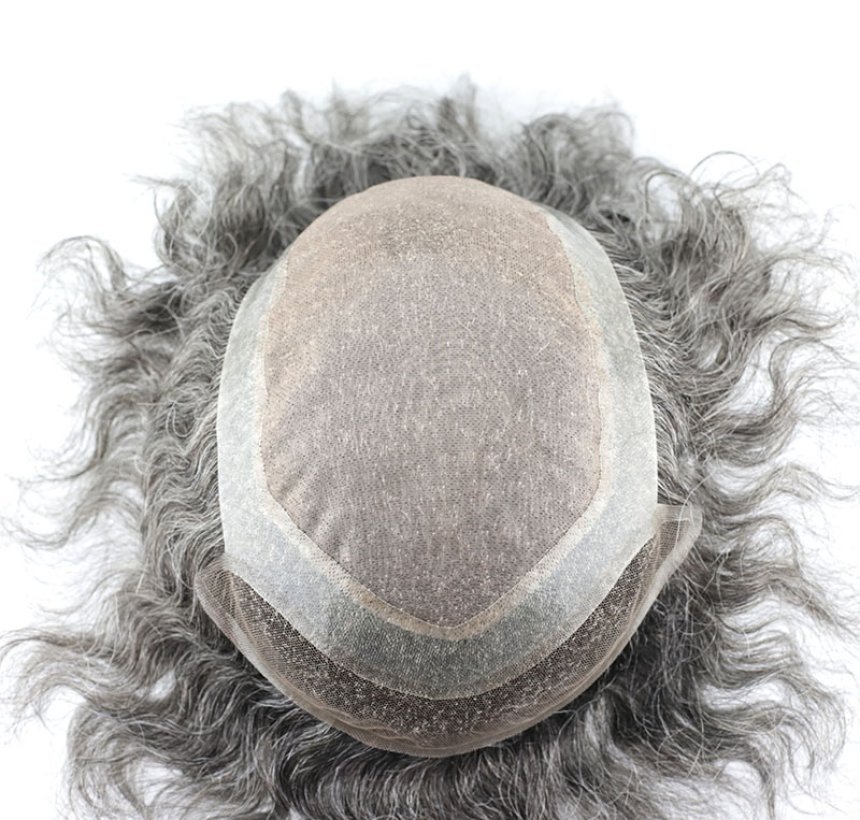
Gray blend | Synthetic or human gray may react differently | Approve the blended texture, not color alone |
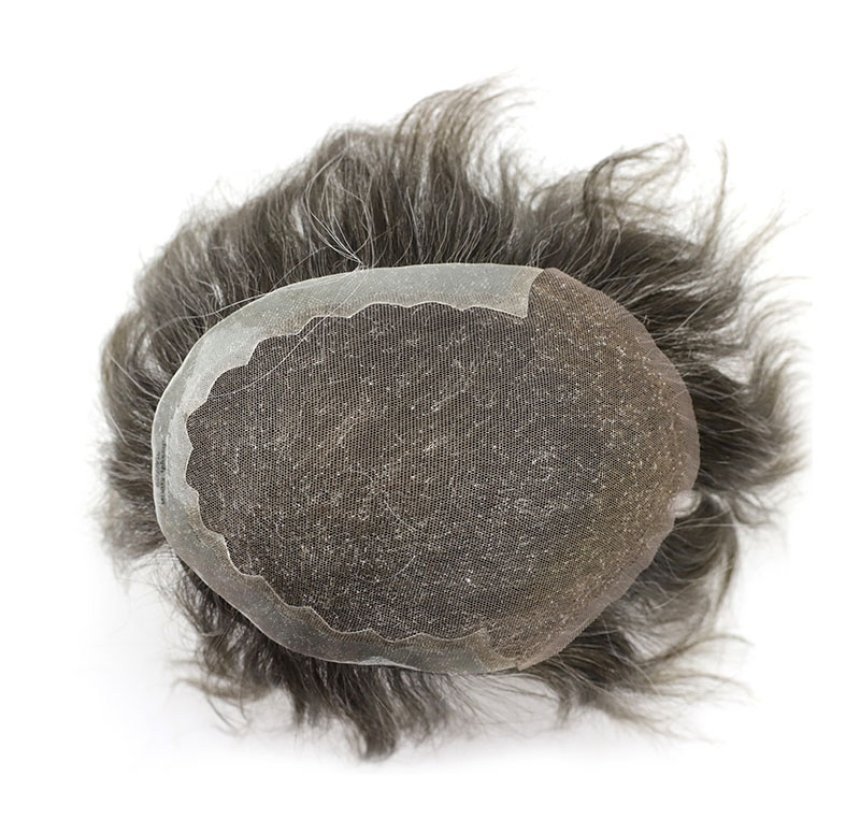
Hair that has been lightened, colored, or chemically textured may hold a different curl from less processed hair. Repeated bleaching can leave strands drier and more prone to frizz. Dark and light fibers within a gray blend may also have different textures. The supplier should test the complete color blend rather than a single untreated bundle.
When highlights are required, ask for a dry pattern photo after coloring. A sample approved before color processing may not represent the production piece. Use gentle cleansing and moderate heat during fitting so the first styling session does not loosen or distort the factory pattern.
The pattern can relax after washing, especially when the hair is brushed straight while wet or dried under tension. Curly systems usually respond better to gentle detangling from the ends, light leave-in moisture, scrunching, and low airflow from a diffuser. The base should be supported so styling does not pull on knots, loops, or injected roots.
Humidity can expand curls and increase frizz, while dry air can make processed hair feel rough. Product weight matters. Thick oils and waxes can flatten a loose wave; alcohol-heavy spray can leave curls rigid. Care instructions should reflect the hair type, base, and climate where the system will be worn.
· Choosing from a close-up curl photo without checking the wearer’s side and back hair.
· Ordering a tight pattern for a very short finished cut, then losing most of the curl during trimming.
· Using only the words wavy or curly without a millimeter setting, approved sample, or reference image.
· Ignoring root direction, so the correct curl falls in the wrong direction at the front or crown.
· Approving wet photos, which hide the dry volume, shrinkage, and frizz level.
Ask for the sample to be washed once, air-dried or diffused under a stated method, and photographed dry against a plain background. Include a ruler, one side view, and one overhead view. Lightly comb a small section so the buyer can see whether the pattern returns after handling.
For repeat orders, store the curl setting, hair origin, color process, strand diameter, length, density, and sample number together. A curl code without those details can drift when another hair batch or color treatment is used.
The custom men’s hair system category allows buyers to specify hair length, color, density, curl, direction, and base details. Send these items as one coordinated specification.
Compare the dry production piece with the approved sample at the same length and under similar lighting. Inspect the front, top, crown, and ends for uneven curl, straight patches, overprocessed frizz, or an abrupt texture change. Confirm that both sides fall evenly and that the crown turns in the ordered direction.
A system does not need identical curls from root to tip; perfectly repeated coils can look artificial. Natural variation is acceptable when the overall pattern, density, and direction remain balanced. Photograph any problem beside a ruler and mark its location on the base drawing.
Use the Eminent Hair contact page to send dry reference photos, a curl sample, and the complete order specification before production begins.
Qingdao Eminent Hair Products Co., LTD is a Qingdao-based wig and hair system supplier. Its company profile describes about 50 factory workers and roughly 500 knotting workers. The company offers different base designs, hair origins, colors, lengths, densities, and custom textures. A curl order is easier to reproduce when the millimeter setting is paired with an approved dry sample and the intended finished cut.
A natural hair system curl begins with the wearer’s own side and back hair. Select a millimeter setting and visual pattern that will still match after the system is cut to its finished length. Then coordinate density, strand diameter, root direction, color processing, and care. Dry sample approval gives the supplier a clearer target than a broad label such as wavy or curly.
These answers address the most common questions buyers ask when specifying hair texture.
It usually refers to a loose wave formed around an approximate 32 mm setting. The finished appearance still changes with hair length, strand diameter, processing, density, and styling.
Yes. Smaller millimeter settings generally create tighter curves, while larger settings create looser waves. Supplier samples should be used to confirm the actual result.
A short cut can remove much of the strand needed to form a complete bend. Light waves often become subtle when the supplied hair is trimmed to a short finished length.
They may need less density than straight systems because curls overlap and create more visible volume. The right level still depends on the wearer’s side hair, strand diameter, length, and base.
Send dry daylight photos or a hair sample, the millimeter setting, supplied and finished length, hair diameter, density, color, gray ratio, root direction, part and crown location, and the planned hairstyle.
The quality of the products is the foundation of our existence!Customers'satisfaction is our permanent commitment!

Follow us on social media and find more about our hair procedures and for our latest news, photos and success stories.
TELEPHONE :+86-18765287179
WHATSAPP :+86-18765287179


© 2026 Qingdao Eminent Hair Products Co.,LTD. All Rights Reserved. Powered by HiCheng