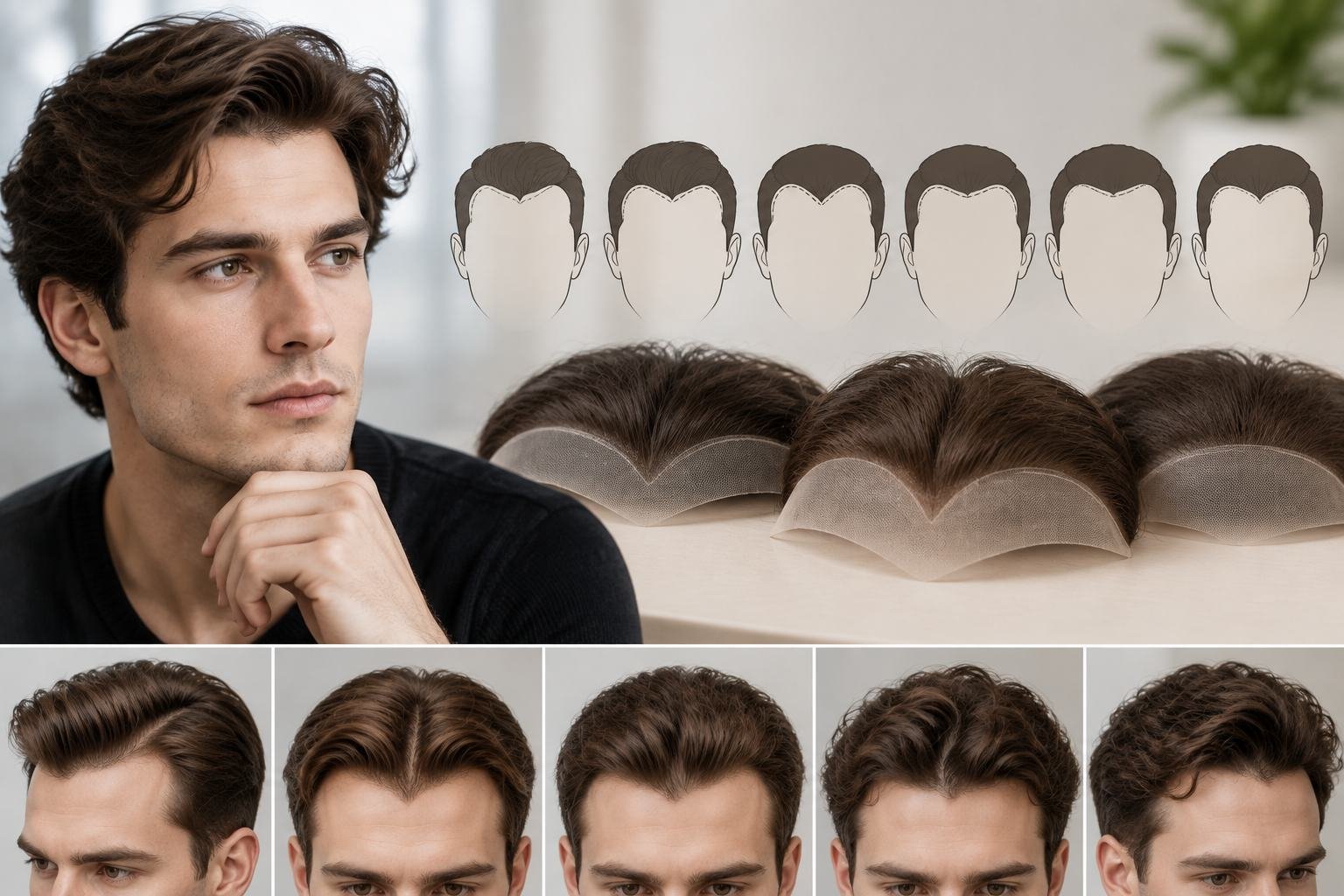
Hair system front hairline shapes define the curve, width, and visual character of the front edge. Common options include A, AA, B, BB, C, and CC contours. The right shape should match the wearer’s mature hairline, temple position, face proportions, hairstyle, and how much of the front will be exposed. A familiar letter is only a starting point.
A front can look unnatural when its curve is too straight, too low, too narrow, or too sharply peaked for the wearer. The base shape also affects where adhesive, tape, lace, or perimeter material sits. A good order combines the contour with front height, recession, density graduation, hair direction, and reference photographs.
Choose a contour that follows the wearer’s real temple-to-temple line instead of selecting the deepest or lowest shape by default. A and AA create more pointed or peaked corners. C and CC create rounder, wider curves. B and BB sit between those visual ideas. The most natural choice is the shape that agrees with the wearer’s recession, forehead height, and planned style.
Shape family | Visual character | Often suits | Main check |
A | Rounded with a defined central curve | Soft mature hairlines and natural recession | Does the center sit too low? |
AA | Narrower, sharper version of A | Visible widow peaks or pointed corners | Can look sharp on a wide forehead |
B | More angular than A | Moderate recession and defined corners | Check temple width |
BB | Narrower, pointed B variation | Stronger widow peaks | Needs matching natural corners |
C | Broad, relatively straight curve | Wide hairlines and flatter fronts | Avoid a rigid straight edge |
CC | Deeper rounded curve | Wide fronts needing a softer circular line | Check that the depth matches the face |
The letters are manufacturing references for the outline of the front edge. They help a buyer and factory discuss the same general shape, but they are not a universal face-measurement system. One supplier’s C or CC may differ slightly from another supplier’s drawing. Confirm the actual contour with a template, diagram, or close front photograph.
The second letter usually indicates a narrower or more pronounced version within the same family. AA and BB commonly show sharper corners or a stronger peak than A and B. C and CC are often chosen for a wider, rounder front. The exact finished appearance still depends on base size, hairline position, density, and styling.
The official front hairline guide explains the main A, AA, B, BB, C, and CC references and shows why the contour should be selected before a custom system is made.
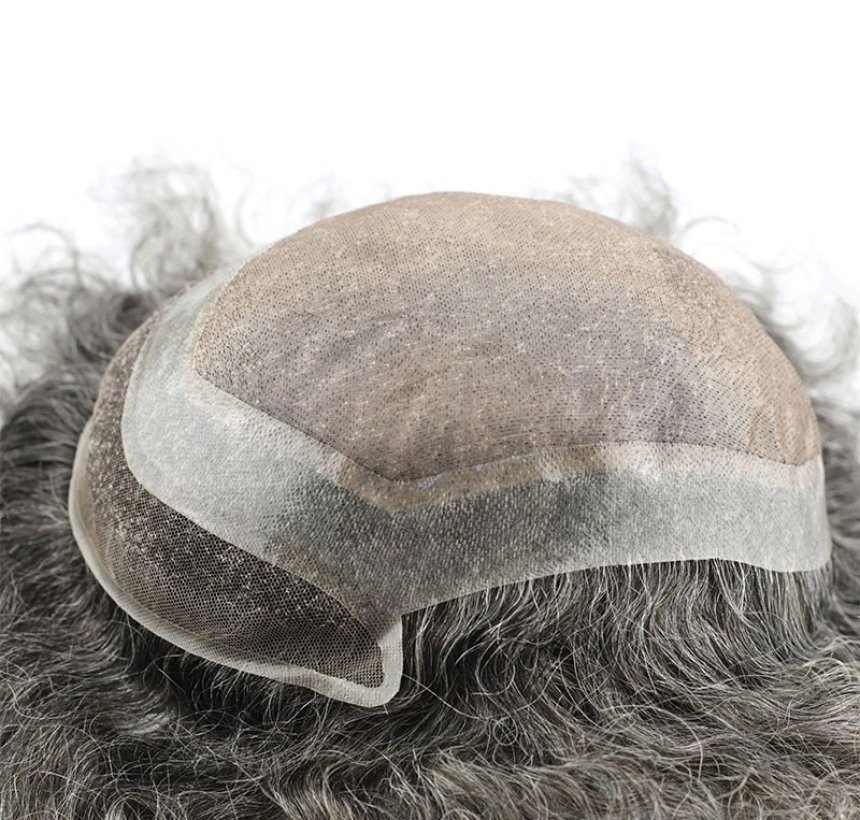
An A front has a curved outline with a more defined center and corners. It can work when the wearer has a softly rounded hairline with visible but not extreme recession. The design gives the front some character, so it does not read as a single straight strip when the hair is brushed back.
AA is narrower and more pointed. It can suit a wearer whose natural hairline forms noticeable peaks or a widow’s peak. It needs care on a broad forehead because pointed corners can make the front look smaller or sharper than the surrounding face. The center height and temple placement should be checked together.
B has a more angular character than A. It can be useful when the natural front has defined corners or a stronger temple transition. BB narrows and sharpens that impression. These shapes can look convincing on a wearer with a real peak, but they may look drawn-on when placed on a flat, softly rounded front.
A sharp corner is easy to see when density is heavy, the front is very dark, or the hair is brushed straight back. A graduated first section and a slight irregularity can soften the edge. The solution is not always a different contour; it may be a better combination of front shape, density, hair direction, and color contrast.
C is usually flatter and less pointed than A or B. It can suit a wider hairline or a style that falls across the forehead. CC deepens the curve and creates a rounder front. Both can be useful when a sharp widow peak would not match the wearer’s natural outline.
A rounded contour still needs the correct height. If the front sits too low, the face can look shorter and the system may appear obvious. If it sits too high, the temples or natural hairline may remain exposed. Mark the planned front position on the template before choosing the letter.
img.A and AA Hair System Front Contours.jpg
· Measure the distance between the natural temple points and the center front.
· Photograph the hairline dry, without fibers or strong styling product.
· Record where recession begins on each side; left and right do not always match.
· State whether the hair will be worn forward, parted, lifted, or brushed back.
· Use a transparent template when the front is irregular or the thinning area changes direction.
A contour cannot hide unsuitable density. A pointed AA or BB front with uniform heavy density may look like a solid cap. A broad C or CC front with a very thin first section may fail to cover the desired hairline position. The first rows should be planned with the contour, not added as an afterthought.
Graduation is especially important when the front will be exposed. A lighter first section can soften the edge, while slightly greater density behind it supplies styling support. Dark straight hair against light skin needs more careful spacing than light or gray hair with lower contrast.
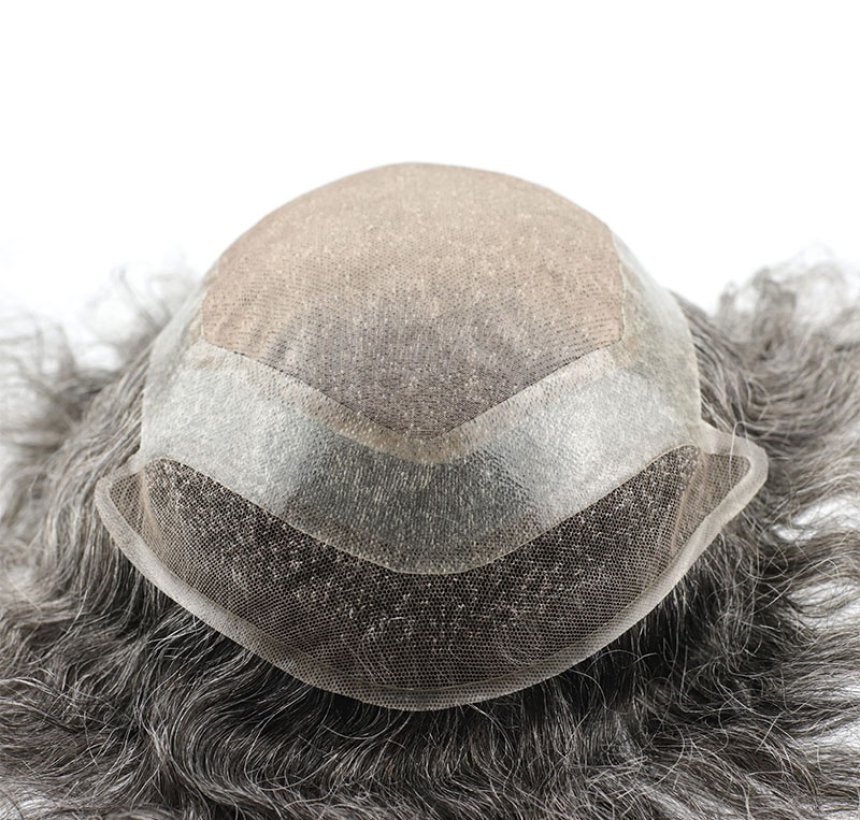
Lace can provide a soft edge when the contour is exposed. Skin and PU bases can create a clean perimeter but may feel or look different at the front. Monofilament offers structure and flexible ventilation. A combination base may use a lace front with a stronger center or perimeter. The chosen contour must fit the actual front material and attachment plan.
Order detail | Why it matters | Evidence to send |
Contour letter | Sets the general front outline | Supplier drawing or reference photo |
Front height | Controls facial balance and coverage | Marked template |
Temple recession | Keeps corners from sitting too far forward | Left and right side photos |
Front density | Softens or strengthens the visible edge | Graduation map |
Base material | Changes edge feel and attachment | Base diagram and sample |
A forward fringe can cover much of the front, so a soft curve may be enough. A side part reveals one corner and makes temple placement more important. A brushed-back style exposes the entire contour and needs careful graduation. A short crop shows the front outline clearly because there is less length to disguise the transition.
A mature hairline is not a perfectly straight line placed close to the eyebrows. It usually has some height and recession at the temples. Setting the contour too low can make the wearer look younger in an artificial way. The front should follow the wearer’s facial proportions and the age impression requested for the style.
· Choosing the lowest front position because more coverage seems safer.
· Selecting AA or BB for a wearer whose natural corners are wide and rounded.
· Using one straight front measurement without recording temple recession.
· Approving a front under warm light, where density and knot visibility appear different.
· Changing the front contour and density at the same time without recording which change improved the sample.
Request front, three-quarter, side, and top photos at eye level and in indirect daylight. Ask for the hair dry and styled in the planned direction. Compare the contour with the wearer’s own temple line, not only with the mannequin image. Check whether the first rows look irregular enough to avoid a ruler-straight edge.
A sample should be checked before a larger order or repeat production. Record the contour letter, front height, base material, density by zone, hair direction, and sample number. If the wearer’s haircut changes, review the front again because a short cut can expose more of the edge.
For custom specifications, review the custom hair system category and send the contour, front height, base material, density map, and hairstyle as one order brief.
Qingdao Eminent Hair Products Co., LTD is a Qingdao-based wig and hair system supplier. Its company profile describes about 50 factory workers and roughly 500 knotting workers. The company supports different base designs, front contours, hair origins, colors, lengths, densities, and custom requirements. A template and approved front sample help its production and quality teams reproduce the intended hairline more accurately.
A, AA, B, BB, C, and CC are useful front hairline references, but the letter alone does not create a natural result. Match the contour to the wearer’s temple recession, front height, face proportions, hairstyle, base material, and graduated density. Use a drawing or template, approve a dry daylight sample, and record the complete front specification before repeat production.
These answers cover common contour and custom-order questions.
There is no single best shape. A natural contour follows the wearer’s own temple recession and front height. C or CC may suit a broad rounded front, while A, AA, B, or BB may suit more defined corners.
AA is generally a narrower, sharper version of A. It can suit a visible peak or widow’s peak, while A often gives a softer rounded impression.
C and CC are often considered when the wearer needs a wider, rounder front without pronounced pointed corners. The exact depth and height should be checked against a template or sample.
It can. Exposed contours usually need a softer front density and a gradual transition behind the edge. A pointed shape with heavy uniform density may look more obvious.
Send front and side photos, a temple-to-temple measurement, front height, recession notes, contour preference, base material, density map, hair direction, color, length, and the intended hairstyle.
When the details are ready, use the Eminent Hair contact page to send the template, photos, and approved contour reference.
The quality of the products is the foundation of our existence!Customers'satisfaction is our permanent commitment!

Follow us on social media and find more about our hair procedures and for our latest news, photos and success stories.
TELEPHONE :+86-18765287179
WHATSAPP :+86-18765287179


© 2026 Qingdao Eminent Hair Products Co.,LTD. All Rights Reserved. Powered by HiCheng