
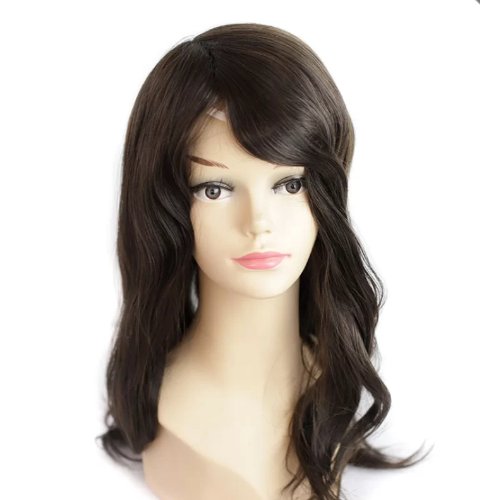
The Custom Hair System specification sheet is where client’s preferences turn into manufacturing requirements. The sheet contains information about the size of the base, the shape of the front edge, materials, density, length, color, curl, hair direction, gray content, ventilation, and attachment method. Reading all the fields in combination avoids one common mistake - each field separately is written perfectly, but the whole thing doesn’t come together as one design.
A specification sheet is not a list of options that have nothing to do with each other. The material used for the base defines the possibility of ventilation. The density defines the weight. The hair direction affects the parting line and the behavior of the crown. The front contour shifts the location of the hairline rows.
It is important for a worksheet to contain details such as user’s name or order number, the size and shape of the base, the shape of the front, materials of the base by zones, the source and type of hair, the hair color and gray scale, hair length before and after fitting, hair density by zones, hair curling/ waving, hair part and crown placement, and hair flow.
Field | What it controls | Check before approval |
Base size | Coverage and attachment area | Does it cover the full thinning area? |
Front contour | Hairline shape and temple position | Does it match the reference template? |
Base material | Comfort, airflow and construction options | Is each zone named? |
Density | Visual fullness and weight | Is density listed by zone? |
Hair direction | Part, crown and styling behavior | Does it match the final hairstyle? |
Color and gray | Blending with side and back hair | Was the blend approved in daylight? |
Base size is the foundation for every other decision. For a custom men’s system, record front-to-back and side-to-side measurements, then check the perimeter against the thinning pattern and available attachment area. A base that only covers the bare patch may leave weak hair under the edge. A base that is too large can cover healthy hair or create bulk.
Numbers alone may not describe an uneven hair-loss area. A template shows a deeper temple, a wide crown, or an angled back edge. Mark the front hairline, left and right temples, crown direction, parting, and any area that must remain open. Keep the drawing with the written measurements.
The custom hair system category is a useful reference for comparing base designs, but a buyer’s own measurement and template should control the final specification.
A, AA, B, BB, C, and CC are common contour references, but they do not replace a front-height measurement. Confirm whether the front will be worn forward, parted, or brushed back. A mature hairline usually needs temple recession and enough height to balance the face. The contour, base edge, density graduation, and hair direction must agree.
A combination system can use lace at the front, mono through the center, and PU or another reinforcement around the perimeter. The sheet should name the material for each zone rather than saying simply lace or skin. Material affects ventilation, attachment, drying, feel, and expected service life.
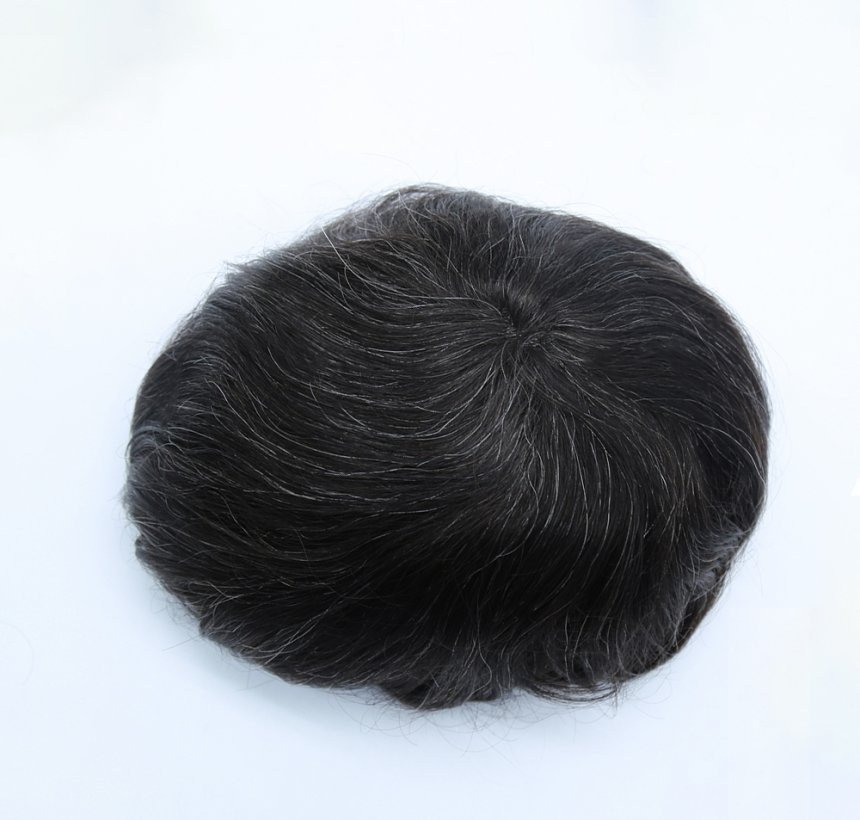
It should be noted that density is dependent on both hair length and hair curl. Longer hair will add more bulk and density. Curl adds bulk and reduces length. Dark and straight hair may appear to have more bulk against a lighter scalp than if it was dark but blended. It is recommended that the density chart include density at front, top, crown, side, and back as needed.
· Confirm whether length is supplied length or finished cut length.
· State the curl or wave setting and attach a dry reference photo.
· Record strand diameter when the wearer’s side hair is especially fine or coarse.
· Check that the requested density can be carried by the selected base.
· Do not approve a density percentage without a zone map or sample reference.
It should be noted that density is dependent on both hair length and hair curl. Longer hair will add more bulk and density. Curl adds bulk and reduces length. Dark and straight hair may appear to have more bulk against a lighter scalp than if it was dark but blended. It is recommended that the density chart include density at front, top, crown, side, and back as needed.
Free style, left part, right part, brush back, forward, and crown swirl describe different root behavior. The sheet should mark the part location and crown center on a top-view drawing. A system can have the correct color and density yet feel wrong if the root direction fights the hairstyle.
The sheet should state whether each zone uses single knots, double knots, split knots, V-loops, injection, or a hidden-knot construction. The method should suit the base and the visible area. Fine work near an exposed front may need smaller attachment points, while covered interiors can use stronger construction.
Specification group | Common conflict | How to resolve it |
Base and ventilation | Requested method does not suit the material | Confirm an alternative method by zone |
Density and length | Long hair makes the chosen density look too full | Review weight and finished cut together |
Contour and front height | Letter shape sits too low or too straight | Use a template and marked front point |
Color and gray | Sample lighting hides contrast | Approve dry photos in daylight |
Part and crown | Root direction conflicts with style | Mark top-view direction on the drawing |
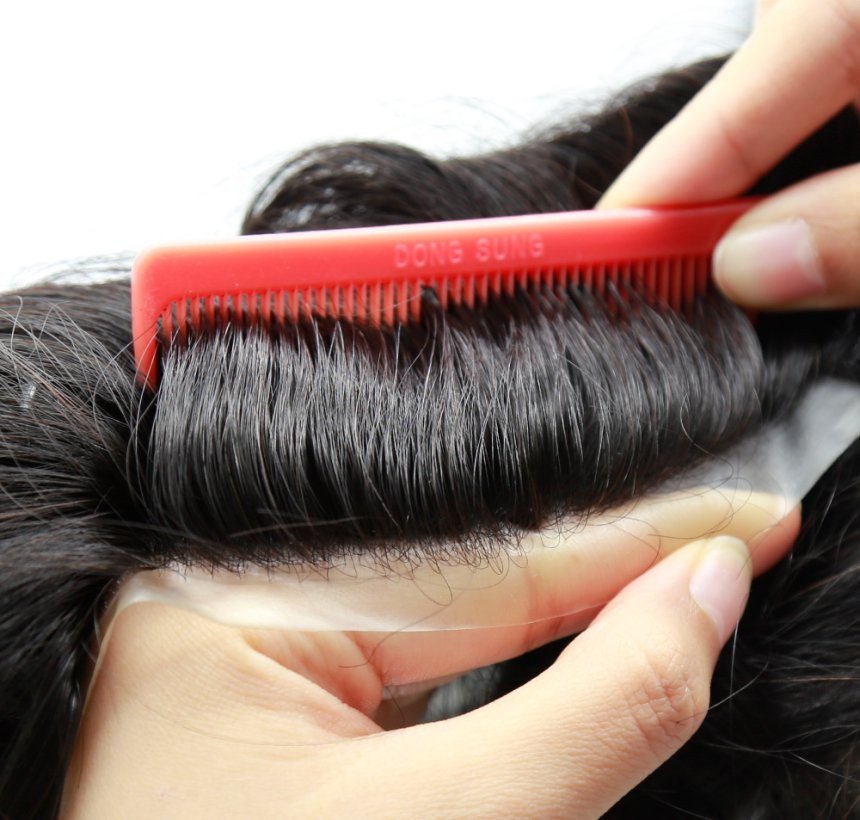
Prior to manufacturing, check if all mandatory information is entered into the specification, and there are no contradictions between any two fields. Prior to delivery, make sure that the final product matches the approved specification and sample. Verify front outline, base size, materials in different zones, density, color, hair orientation, curl type, knot technique, and underside. Record changes per specific location rather than just pass or fail.
The specification that is approved needs to be stored along with the number of the sample, its date, client’s name/collective name, and the pictures. In case of re-ordering, it needs to be mentioned which elements need to be retained while which have to be changed. New color, hair cut style, curls, and base may necessitate a new sample.
A specification can easily change if there are a few documents circulating via email or messaging software. Number the approved document and put a date next to it. Highlight any changes in a small revision note; examples include lower front density, different crown orientation, and different perimeter from lace to PU. The production team should refer to just one up-to-date file while keeping previous versions accessible.
This is because a good specification sheet will assist in communication between the buyer, stylist, factory and quality control expert. The stylist may give directions concerning cuts while the buyer will approve colors and textures. The quality
For a brand collection, the sheet can also become a repeatable product record. Keep the same field names across colors and sizes, then add only the variables that change. This makes samples easier to compare and helps a purchasing team identify whether a problem came from the base, hair batch, ventilation, or styling instruction.
Use the Eminent Hair contact page to send the sheet, marked template, reference photos, and questions. Written confirmation is especially important when a material or ventilation method changes by zone.
Qingdao Eminent Hair Products Co., LTD is a Qingdao-based wig and hair system supplier. Its company profile describes about 50 factory workers and roughly 500 knotting workers. The company supports custom base designs, hair origins, colors, lengths, densities, textures, and ventilation requirements. A complete specification sheet gives production and QC teams a shared, reviewable target.
When the specification is ready, send it through the Eminent Hair contact page for written production confirmation.
A custom hair system specification sheet is useful when its fields are read as one connected design. Start with base size and shape, then confirm material, contour, density, length, curl, color, direction, ventilation, and attachment. Use a template and approved dry sample for details that numbers cannot show. This process reduces misunderstandings before production and makes repeat orders easier to control.
These questions explain the most important fields for buyers and salons.
It allows to turn a visual request into tangible production data and serves as an evidence for buyer to approve samples and repeat orders.
The base size and shape are the most crucial elements that determine all other elements that follow next – density, material, contour, and ventilation.
Only one percentage value can conceal many important details, therefore, density at front, top, crown and back areas should be considered and mapped for blended effect.
Template is very helpful if the patient suffers from an uneven recession, an irregularly shaped crown area, a unique front contour, or the order is a repeat.
The hair system should be compared to the specification sheet and sample in relation to size, contour, material (zone by zone), density, color, gray, curl, direction, ventilation, and attachment at the underside.
The quality of the products is the foundation of our existence!Customers'satisfaction is our permanent commitment!

Follow us on social media and find more about our hair procedures and for our latest news, photos and success stories.
TELEPHONE :+86-18765287179
WHATSAPP :+86-18765287179


© 2026 Qingdao Eminent Hair Products Co.,LTD. All Rights Reserved. Powered by HiCheng