A color code is a filing label. It isn't a match.
Picture a client returning in autumn with his March order number. The system he is wearing looks lighter now; his temples look grayer. He wants “the same color.” Same as which one—the system on delivery day, the piece on his head today, or the hair beside it? Your team has to answer before sending us a reorder. Otherwise the order number settles nothing.
Eminent Hair makes custom men's hair systems with color and gray-hair options. To use those options well, your salon needs a reference that survives a change of stylist and a change of season. We would rather receive one marked swatch than a dozen contradictory phone photos.
The new hair meets the client's own hair at the sides and back. That is the place to look first—not at a color chart under the reception lights. Hold a proposed swatch against both sides of the head. One side may have more gray. If you take a small hair sample, put the source area and date on the sleeve. A sample from the nape labelled only “brown” won't help much next spring.
We still want photographs. Give us a front view, two side views, and a top view, taken in the same light. Skip the beauty filter. A phone may make an ash brown look warm; two phones may disagree while pointed at the same client. Keep the physical reference whenever a close match matters. Photos show the pattern. Hair shows the color.
One question belongs here: did the client dye his hair recently? Imagine copying that fresh dark shade into a piece he'll wear through winter while the dye is growing out around his ears. The brief should name the target, in plain words: “match the dyed sides now” or “match the natural growth underneath.” The color chart can't make that choice for your client.
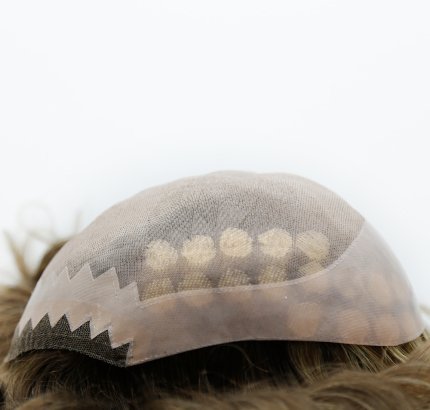
“Brown with gray” covers too many possibilities. A temple can carry visible silver while the front is almost solid brown. The crown might be darker than both. On a simple head sketch, mark the front, crown, left temple, and right temple. Write a short note beside each. For example: “front—little gray; left temple—most visible gray; crown—match side hair.” That is an illustrative brief, not a fixed recipe.
Our custom hair system options include gray-hair choices. We need the effect you want before discussing an exact option on the chosen base. If you can keep a swatch from the approved system, do it. “Salt and pepper” is an impression; a labelled sample shows the mix.
Then ask how he wears the front. Hair combed backward puts the edge on show; a fringe hides much of it. A dark, dense front may look like the wrong shade even when the color itself is close. On the order sheet, put the cut and styling direction beside the color sketch. Keep density and texture on their own lines. Otherwise the next adjustment may be made to the wrong thing.
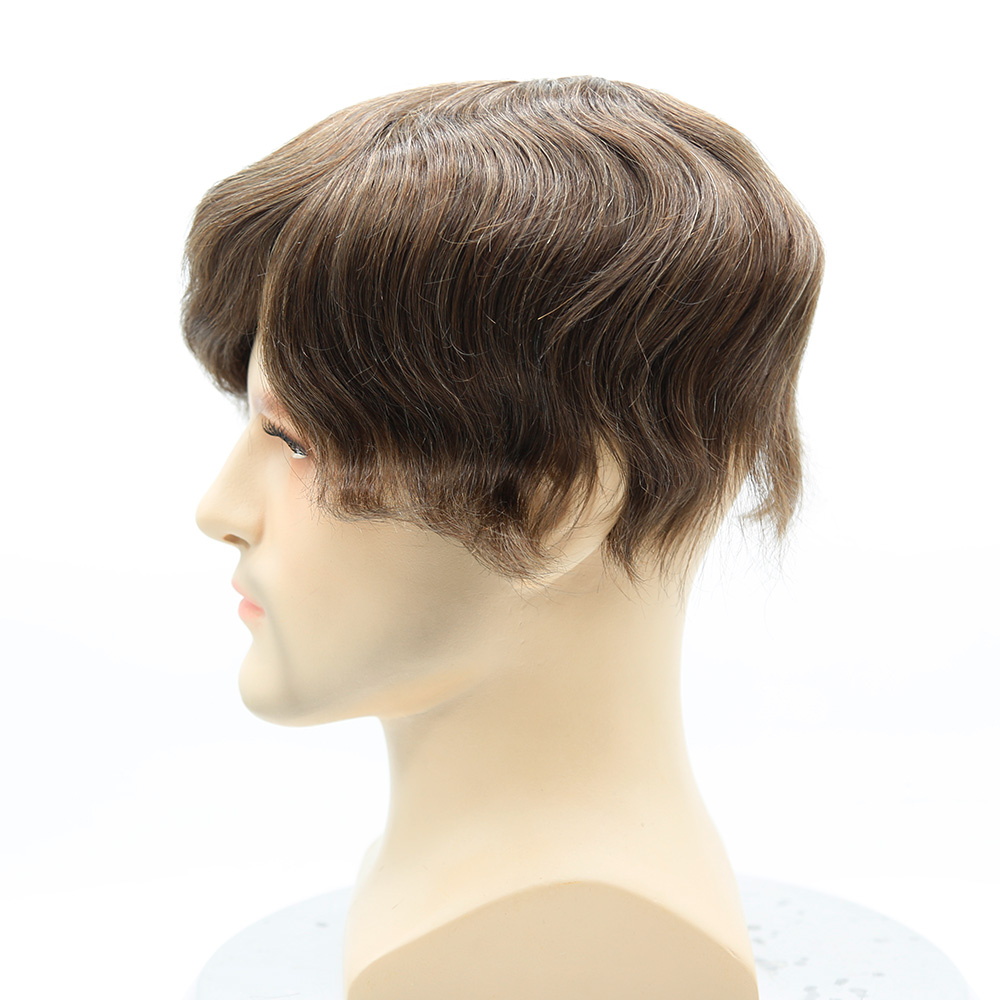
The first fitting is the rehearsal for every reorder. Put the proposed swatch next to the client's side hair. If the salon changes the shade after seeing it there, the first request is now history; the approved swatch is the reference. Give that swatch an order number and a date. In the same file, keep the gray sketch, base, density, and the note explaining the change. No one should have to guess which of three versions was finally accepted.
With the client's permission, photograph the fitted hair from the front and each side before he leaves. Use the light from the original consultation, if possible. Put the images beside the swatch—not in a private phone gallery where the next stylist can't find them. A useful file lets a colleague see the match without a long explanation.
On the reorder form, “unchanged” needs an object. Does it refer to the original swatch or the faded system currently on the client's head? Put the answer on the page. If he has more temple gray, draw that change. A quick conversation is easy to forget; the next order may be cut by someone who wasn't in the room.
Set the new system beside the retained approval sample and the client's current hair. Sometimes those two references disagree. Then the salon needs to choose: reproduce the earlier approved piece or adjust to the hair the client has now. We cannot infer that preference from “same as before.”
At the fitting chair, turn the client's head. Check the front in the mirror, then each temple, then the parting. “Too warm at the left temple” tells us something we can locate. “Wrong color” doesn't. If the complaint comes six weeks later, lay out the new piece, the worn piece, and the saved swatch. Which two agree? That comparison is more useful than guessing whether the client's coloring routine or the supplied hair changed.
When the client chooses a new look, keep the old approval. Put a date on the new swatch and mark it “current.” The history can answer a surprisingly common question at the next visit: “What did we order before this one?”
Send the swatch or consistent photographs with your zone sketch and previous order number. Add the base, density, and any change to the cut. Need a color sample before the whole system? Put that request at the top of the file. Our men's hair system shows the product context; our contact page gives you a place to send the brief. The shade name can come along, but it shouldn't be the only clue.
Only if the approved swatch still matches what the client wants. Bring the swatch and order number into the new file. Then look at his hair today. A code cannot tell you whether his temples changed since March.
Use a small amount of the hair beside the system—often the side or back—and label that exact spot. A side sample can't show us the crown's pattern, so add photographs from above and in front.
It could mean a silver temple or a scattered crown. Draw the area. A note such as “left temple is the grayest” and a sample say more than the phrase “salt and pepper” ever will.
The lamp, camera, and screen may all change the color you see. Compare the actual hair in consistent light. Use photographs to show placement and overall effect, with a physical sample as the closer color reference.
If the old swatch is gone, start over. The same applies when the client changes his color or hairstyle enough to expose a different blend. Keep both dates: the earlier approval and the new one.
The quality of the products is the foundation of our existence!Customers'satisfaction is our permanent commitment!

Follow us on social media and find more about our hair procedures and for our latest news, photos and success stories.
TELEPHONE :+86-18765287179
WHATSAPP :+86-18765287179


© 2026 Qingdao Eminent Hair Products Co.,LTD. All Rights Reserved. Powered by HiCheng