A custom men’s toupee looks natural only when the details match the wearer’s real hair, scalp shape, lifestyle, and age. Many fitting problems start before the hair system is made. The base is a little too wide. The front contour sits too low. The hair density is heavier than the client’s side hair. The grey ratio is missing from the temples. Small choices like these can make a good hairpiece look obvious.
For men ordering a custom toupee, and for salons preparing a custom hair replacement system for clients, accurate measurements help reduce trimming, refitting, and return issues. The main details to record are base size, front contour, hair density, grey ratio, base material, hair color, curl, and hair direction.
A men’s hair system is not only a coverage product. It must blend with existing hair from several angles: the front hairline, the crown, the sides, and the back. A customer may look fine in a mirror from the front, but the toupee can still look heavy from the side if the base or density is wrong.
For daily wear, the goal is simple: the hair replacement system should stay secure, sit flat, and look like the wearer’s own hair after cutting and styling.
Detail | What It Affects | Common Problem If Wrong |
Base size | Coverage and attachment area | Lifting edges or visible gaps |
Front contour | Hairline shape | Too straight or too low |
Hair density | Natural thickness | Bulky top or weak coverage |
Grey ratio | Color blending | Obvious mismatch with side hair |
Base material | Comfort and durability | Too hot, too delicate, or hard to clean |
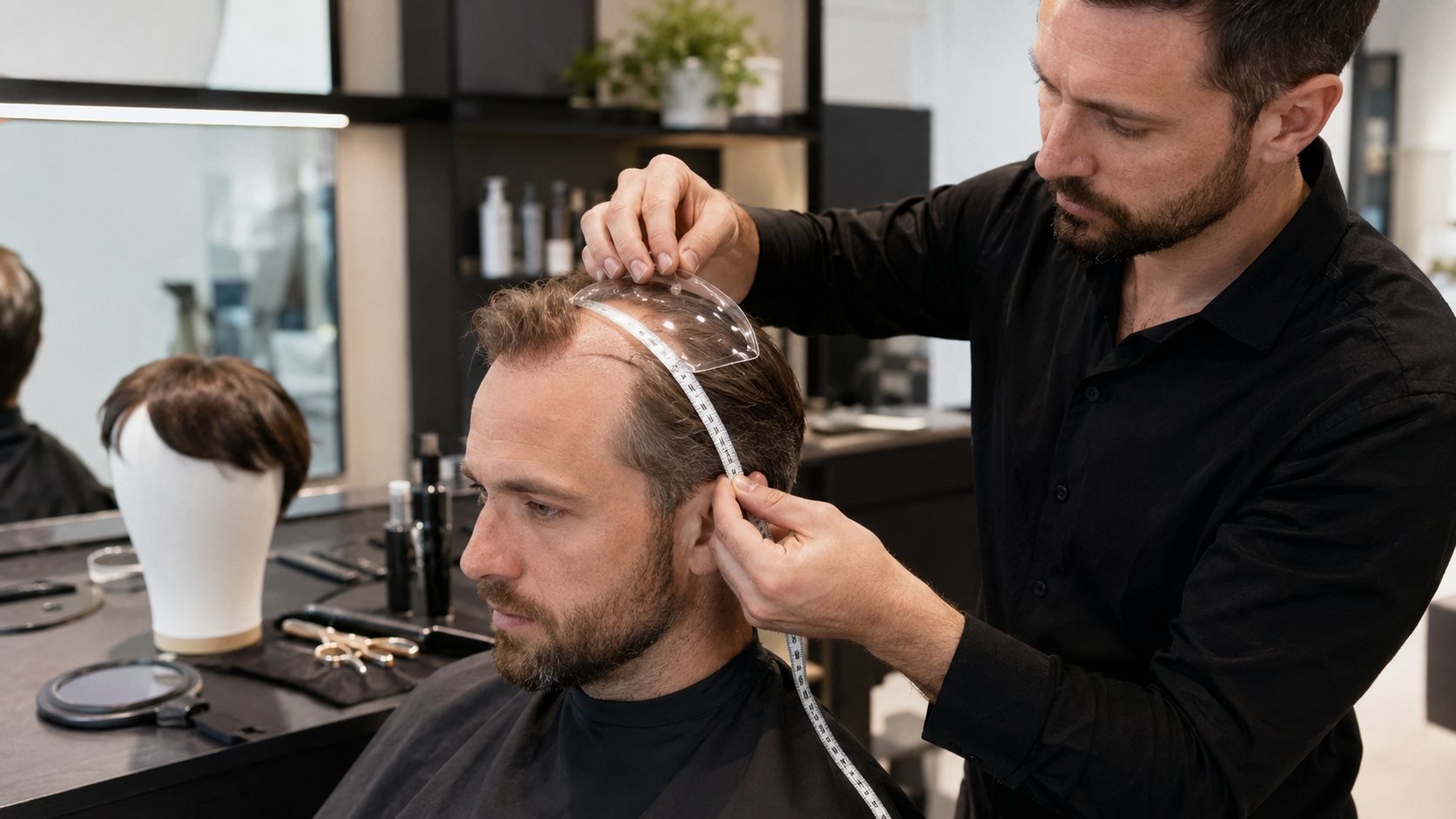
The base size is the foundation of a custom men’s toupee. It decides how much scalp the hair system covers and where tape or glue can hold the unit. Before measuring, the hair should be combed away from the thinning area so the true hair loss pattern is visible.
Start at the planned front hairline, not always the lowest point of the remaining hair. For many adult men, placing the front hairline too low can look less natural than a slightly mature hairline. Measure from that front point over the top of the scalp to the back edge of the thinning area.
A useful rule is to allow a small margin beyond the bald area. If the base only covers the exact bare patch, the edge may sit on weak or thinning hair. That can make attachment less stable. If the base is too long, it may cover healthy hair and create a raised edge after bonding.
Place the tape across the widest part of the hair loss area, from the left edge to the right edge. Keep the tape flat against the scalp. Do not pull it tightly across the head, because that can make the base size smaller than needed.
For clients with strong side hair, the base usually should not extend too far into the sides. A narrower base can blend better when the barber cuts the toupee into the existing hair. For clients with wider thinning across the top, a larger base may be needed to create a balanced result.
Some men do not have a simple oval bald area. The recession may be deeper at one temple. The crown may be wider than the front. In this case, a clear plastic wrap and tape template can give the factory a more accurate base shape than numbers alone.
Mark these points on the template:
· Front hairline
· Left and right temple areas
· Crown direction
· Back edge of the thinning area
· Desired parting or hair direction
A template is especially useful for salons that serve repeat clients, because it can be saved as a reference for future custom toupee orders.
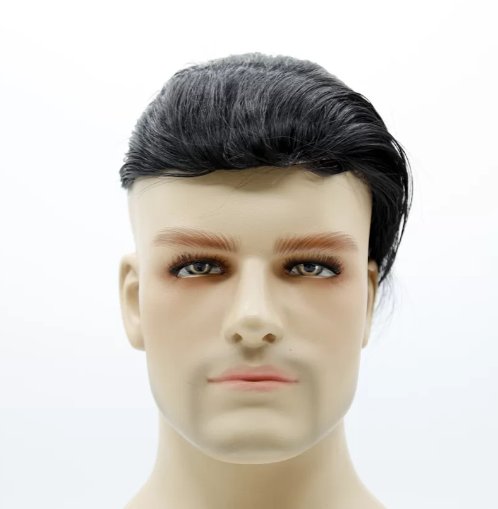
The front contour is the shape of the front hairline on the base. It is one of the first details people notice, even if they do not know anything about toupees. A natural front contour should match the wearer’s age, face shape, and original hairline pattern.
Front contour describes whether the hairline is more rounded, flatter, slightly recessed, or shaped with deeper temple areas. Men with a naturally mature hairline often look better with a soft, slightly receded front shape than with a very straight, teenage-style line.
A front contour that is too low can shorten the forehead and draw attention to the hair system. A contour that is too high may fail to restore the desired look. The best point usually sits where the face still looks balanced after the toupee is cut and styled.
A man in his 20s may want a fuller front, while a man in his 50s may need a softer hairline with lighter density in the first half inch. A business client who wears a side part may need a different front contour than someone who brushes the hair forward.
For salons, front photos are very helpful. Take one photo facing forward, one from each side, and one from above. These photos make it easier to match the custom men’s toupee to the client’s real hairline and head shape.
Hair density means how much hair is added to the base. It affects coverage, weight, movement, and the final cut. Many first-time buyers think more density is safer. In practice, too much density often makes a toupee look less real.
The top hair should not be much heavier than the hair on the sides and back. If a client has fine side hair, a thick top can create a helmet-like shape. If the client has strong, dense side hair, a slightly fuller top may look balanced.
A natural-looking toupee often uses a lighter front and a medium body. This gives the hairline a softer look while still giving enough coverage across the top.
Client Situation | Density Direction | Practical Note |
Young client with thick side hair | Medium to medium-heavy | Good for fuller styles |
Middle-aged client | Medium-light to medium | Usually easier to blend |
Thin side hair | Light to medium-light | Avoid a heavy top |
Exposed hairline style | Lighter front density | Better for realism |
Forward-brushed style | Medium density | Helps cover the base |
A toupee often looks fuller before it is cut. After trimming, layering, and blending, the density appears more natural. This is why the order should not be judged only by the raw piece before styling.
For custom orders, it is helpful to state where density should be lighter or fuller. The front hairline, temples, crown, and parting area may need different density levels.
Grey ratio is the percentage of grey or white hair mixed into the hair system. It matters a lot for men because grey often appears first around the temples and sideburns. A toupee with no grey hair can look too dark when placed next to naturally greying side hair.
The best way to choose grey ratio is to look at the wearer’s side hair under natural light. Indoor light can make dark brown hair look black and grey hair look warmer or duller than it really is. Clear daylight photos are more useful for color matching.
For example, if the side hair has about 20% grey at the temples but almost no grey at the back, the custom toupee may need a small grey percentage around the front and sides rather than an even grey mix across the whole base.
A low grey ratio gives a subtle mature look. A medium grey ratio works for men with visible grey at the sides. A high grey ratio is better for clients whose natural hair is already salt-and-pepper or mostly grey.
The goal is not to make the wearer look younger at all costs. The better goal is to make the men’s hair system look believable next to the face, beard, eyebrows, and side hair.
Base size, front contour, density, and grey ratio are the core details, but a complete custom toupee order should include several more choices. These details affect comfort, styling, and maintenance.
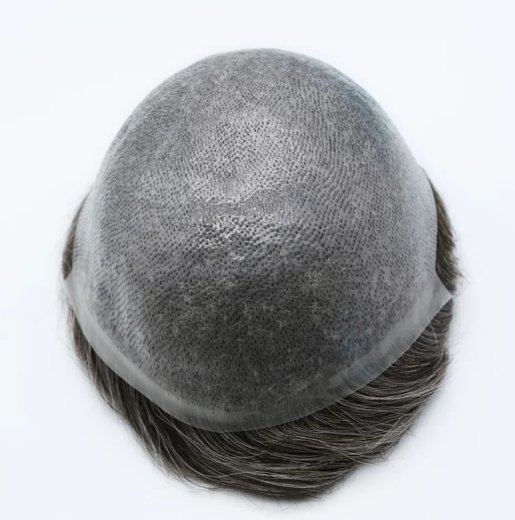
Lace bases are popular for breathability and a soft hairline. Skin bases can be easy to clean and give a close scalp-like look. Mono bases are often chosen when durability matters. A PU edge can make tape or glue attachment easier for many users.
The best base depends on the wearer’s climate, sweating level, attachment method, and care habits. A man working outdoors may need a different base from a client who wears the toupee mainly in an office.
Color matching should not rely on a single photo. The best result usually comes from a hair sample or several daylight photos. Hair length should allow enough room for the barber to cut and blend. Curl or wave should match the natural hair on the sides and back.
Hair direction is also important. Free style gives more styling room, while a fixed part may suit men who wear the same hairstyle every day.
Before sending a custom order, prepare a simple checklist. It saves time for both the buyer and the supplier.
Order details should include:
· Front-to-back base measurement
· Side-to-side base measurement
· Front contour preference
· Base material
· Hair color or color sample
· Grey ratio
· Hair density
· Hair length
· Curl or wave
· Hair direction
· Tape, glue, clip, or other attachment preference
· Front, side, top, and back photos
· Old hair system sample, if available
For salons and hair replacement studios, this checklist also helps keep client records clear. When the client returns for a second unit, the next order can be adjusted from real wearing feedback instead of starting again.
Qingdao Eminent Hair Products Co., LTD is a professional wig supplier based in Qingdao, China. The company supplies men’s toupees, women’s wigs, toppers, stock pieces, custom-made hair systems, and repair services. Its product range covers lace, mono, skin, silk top, and other base designs for different wearing needs.
For custom hair replacement orders, buyers can request different hair origins, hair lengths, colors, base designs, and hair types such as remy hair or virgin hair. This makes the company suitable for individual wearers, salons, hair replacement studios, wholesalers, and resellers that need flexible custom service rather than one fixed product line.
For B2B customers, clear communication is especially valuable. When salons send base size, front contour, density, grey ratio, photos, and order quantity together, the supplier can quote and arrange production more efficiently. For personal buyers, the same details help create a toupee that feels closer to natural hair after cutting and daily styling.
A natural custom men’s toupee starts with careful measurement. Base size gives the right coverage. Front contour shapes the first impression. Hair density decides whether the top blends with the sides. Grey ratio helps the hair system match the wearer’s real age and natural color pattern.
Before placing an order, prepare measurements, photos, color references, and styling preferences. For salons, a repeatable checklist can reduce fitting problems and make each custom toupee order easier to manage. For individual buyers, these details help turn a hair replacement system into something comfortable, believable, and easier to wear every day.
Measure the thinning area from the planned front hairline to the back edge, then measure side to side across the widest part. For irregular hair loss, make a base template and mark the front hairline, temples, crown, and back edge.
The best hair density depends on age, side hair, and hairstyle. Many men look more natural with lighter density at the front and medium density through the top. Very heavy density can look bulky if the side hair is thin.
The grey ratio should match the side hair, temples, beard, and eyebrows. If the side hair has visible grey, adding a small or medium grey percentage to the toupee usually creates a better blend.
A custom men’s toupee is better for special base sizes, unique front contours, mixed grey ratios, and personal density needs. A stock toupee can be a good choice when the standard size, color, and density already match the wearer.
Salons should send base measurements, front contour, density, grey ratio, base material, hair color, curl, hair direction, attachment method, client photos, and old hair system samples when available.
The quality of the products is the foundation of our existence!Customers'satisfaction is our permanent commitment!

Follow us on social media and find more about our hair procedures and for our latest news, photos and success stories.
TELEPHONE :+86-18765287179
WHATSAPP :+86-18765287179


© 2026 Qingdao Eminent Hair Products Co.,LTD. All Rights Reserved. Powered by HiCheng